Quick answer
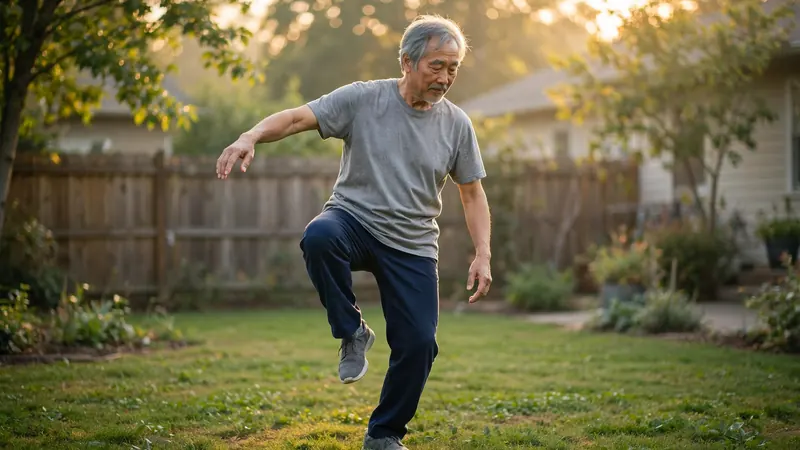
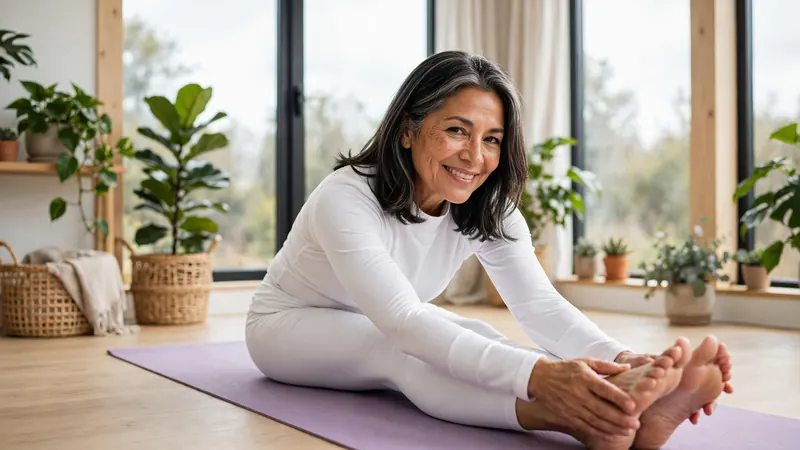
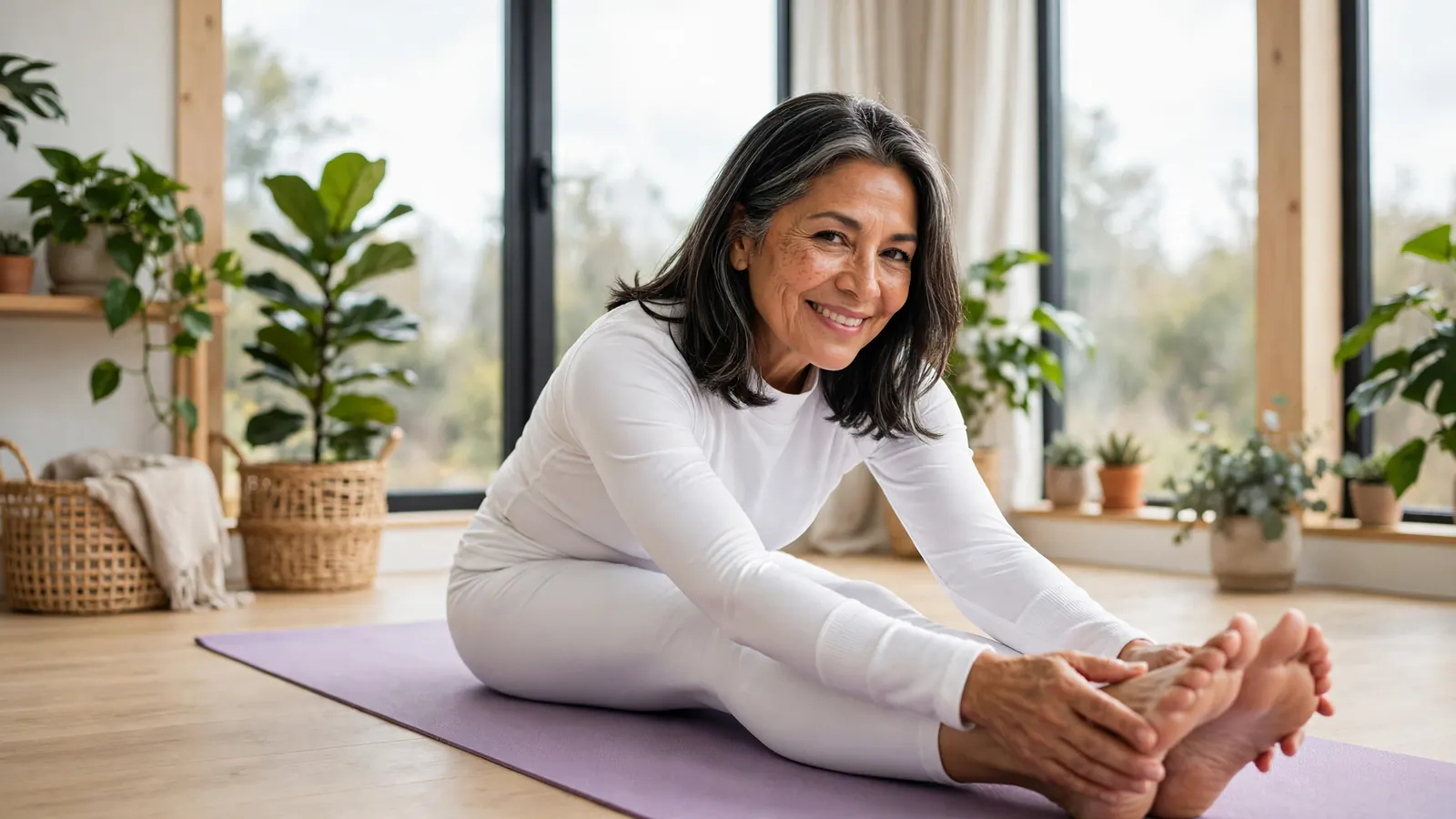
Beginners over 50 can start yoga with 15 to 20 minutes of gentle poses, 2 to 3 days a week. Choose a gentle, hatha or chair yoga style, use a chair or wall for support, and skip poses that cause pain. Good first poses include mountain, cat-cow, supported warrior, tree at the wall, bridge and a resting pose. Check with your doctor if you have health conditions.
Key takeaways
- Start with 15–20 minutes, 2–3 days a week, and build gradually.
- Gentle, hatha and chair yoga are good starting styles; skip hot yoga at first.
- Use props like a chair, wall, blocks or a folded blanket. They are not cheating.
- NIH notes yoga may help with stress, sleep, balance and some types of back and neck pain.
- People with certain conditions, such as glaucoma or osteoporosis, may need to modify poses.
You do not need to be flexible to start yoga. You also do not need to sit on the floor with your legs crossed or stand on your head. Yoga for beginners over 50 is about gentle poses, steady breathing and paying attention to how your body feels. This guide covers which style to choose, seven beginner-friendly poses and a simple 20-minute sequence you can do at home.
What are the benefits of yoga after 50?
According to the National Center for Complementary and Integrative Health (NCCIH), part of the NIH, research suggests yoga may help:
- Relieve low back pain and neck pain.
- Improve general wellness, including stress, sleep and balance.
- Support healthy habits like regular activity.
Yoga also counts toward the balance and flexibility side of a healthy week. The Physical Activity Guidelines for Americans recommend that older adults get 150 minutes of moderate aerobic activity a week, muscle-strengthening on 2 or more days and balance training. Many yoga poses build balance and some strength, but most gentle classes are not a substitute for aerobic exercise, so keep walking too.
Which type of yoga is best for beginners over 50?
| Style | What to expect | Good for beginners? |
|---|---|---|
| Gentle yoga | Slow pace, simple poses, plenty of rest | Yes, an ideal start |
| Hatha | Basic poses held for a few breaths | Yes, look for "beginner" or "level 1" |
| Chair yoga | Poses done seated or holding a chair | Yes, especially with limited balance or mobility |
| Restorative | A few poses fully supported by props, held for minutes | Yes, for relaxation |
| Vinyasa or power | Fast-flowing sequences | Wait until you have some experience |
| Hot yoga | Practiced in a heated room | Not recommended to start; check with your doctor |
If getting up and down from the floor is hard, start with our chair yoga routine. It uses the same principles without floor work.
What do you need to get started?
- A non-slip yoga mat on a flat floor.
- A sturdy chair without wheels, placed against a wall.
- A clear wall space for balance support.
- Optional props: two yoga blocks (or thick books), a folded blanket for your knees, and a strap or belt.
- Comfortable clothes that let you move. Practice barefoot on the mat for grip.
7 gentle yoga poses for beginners over 50
Hold each pose for 3 to 5 slow breaths to start, and build toward 5 to 8 breaths. Breathe through your nose if you can, and come out of any pose that causes pain.
The exercises
Mountain Pose
Works: Posture, balance awarenessHold for 5–8 breaths
- Stand with your feet hip-width apart and your weight spread evenly through both feet.
- Let your arms hang at your sides, lift your chest gently and relax your shoulders down.
- Stand tall as if a string is lifting the crown of your head, and breathe slowly.
- Make it easier
- Stand with your back near a wall or one hand on a chair.
- Make it harder
- Raise your arms overhead as you breathe in and lower them as you breathe out.
- Safety tip
- Keep your knees soft, not locked.
Cat-Cow
Works: Spine, back, neck6–8 slow rounds
- Start on hands and knees on your mat, with a folded blanket under your knees, or do it seated in a chair with hands on your knees.
- Breathe in as you lift your chest and tailbone and let your belly sink gently.
- Breathe out as you round your back toward the ceiling and tuck your chin.
- Make it easier
- Do it seated in a chair.
- Make it harder
- Pause for 2 breaths at each end of the movement.
- Safety tip
- If you have osteoporosis, keep the rounding small and ask your doctor about spinal flexion.
Wall Downward Dog
Works: Shoulders, back, hamstrings2 holds of 5 breaths
- Stand facing a wall and place your palms on it at about shoulder height.
- Walk your feet back until your arms are straight and your body forms an L shape.
- Let your chest move gently toward the floor and lengthen your spine. Breathe, then walk back in.
- Make it easier
- Place your hands higher on the wall and bend your knees.
- Make it harder
- Bring your hands down to the back of a sturdy chair against the wall.
- Safety tip
- Keep your head level with your arms, not below your heart, if you have glaucoma or high blood pressure.
Chair-Supported Warrior II
Works: Legs, hips, balance3–5 breaths per side, 2 times
- Stand beside a sturdy chair with your left hand resting on its back.
- Step your right foot forward and turn your left foot out slightly, feet wide apart.
- Bend your right knee over your ankle, extend your right arm forward at shoulder height and look past your fingertips. Hold, then switch sides.
- Make it easier
- Take a shorter stance and bend your front knee only slightly.
- Make it harder
- Bend the front knee more and hold for 8 breaths.
- Safety tip
- Keep your front knee over your ankle, not past your toes or caving inward.
Tree Pose at the Wall
Works: Balance, ankles, hips3–5 breaths per side
- Stand sideways to a wall with one hand on it.
- Shift your weight onto your inside foot and place the sole of your outside foot against your ankle or lower leg.
- Press your palms together at your chest or keep your hand on the wall. Hold, then switch sides.
- Make it easier
- Keep your toes on the floor with your heel resting on your ankle.
- Make it harder
- Place your foot on your calf, never on the side of your knee.
- Safety tip
- Keep a hand on the wall until you feel steady.
Bridge Pose
Works: Glutes, back of thighs, lower back3–5 lifts, holding 3 breaths each
- Lie on your back on a mat or firm bed with your knees bent and feet flat, hip-width apart.
- Breathe in and press through your feet to lift your hips.
- Hold for a few breaths, then lower slowly one section of your spine at a time.
- Make it easier
- Lift your hips only a few inches.
- Make it harder
- Hold for 5–8 breaths.
- Safety tip
- Keep your weight on your shoulders and feet, never on your neck. Do not turn your head while lifted.
Legs on a Chair
Works: Relaxation, lower back2–5 minutes
- Lie on your back on your mat with a chair in front of you.
- Rest your calves on the chair seat so your knees and hips are bent at about right angles.
- Let your arms relax at your sides and breathe slowly.
- Make it easier
- Place a folded blanket under your head.
- Make it harder
- Stay up to 5 minutes and make each exhale slightly longer than each inhale.
- Safety tip
- Roll to your side and pause before sitting up, then stand slowly.
A 20-minute beginner yoga sequence
- 2 minutes: sit in a chair and breathe slowly, lengthening each exhale.
- 2 minutes: Mountain Pose, then gentle arm raises with your breath.
- 3 minutes: Cat-Cow, 6 to 8 rounds.
- 3 minutes: Wall Downward Dog, 2 holds.
- 4 minutes: Chair-Supported Warrior II and Tree Pose at the Wall, each side.
- 3 minutes: Bridge Pose, 3 to 5 lifts.
- 3 minutes: Legs on a Chair to rest.
Practice this 2 to 3 days a week. If mornings are when you feel stiffest, our morning stretching routine is a quick alternative on non-yoga days.
Should you take a class or practice at home?
NCCIH advises learning from a qualified instructor and practicing appropriately. A beginner or gentle class is a great way to learn proper alignment, and a good teacher will offer modifications. Tell the instructor about any health conditions or past injuries before class. Once you know the basics, home practice is easy to fit into your week. Local senior centers, YMCAs and community centers often run beginner classes.
Safety first: when to talk to your doctor
Yoga is generally considered safe for healthy people when practiced appropriately, but NCCIH notes that older adults may need to take extra care, and that people with certain conditions may need to modify or avoid some poses. Talk to your doctor before you start if you have:
- Glaucoma or another eye condition: ask whether to avoid poses with your head below your heart.
- Osteoporosis or low bone density: ask which forward bends and twists are safe. See our guide to exercises for osteoporosis and bone health.
- High blood pressure, a heart condition, a joint replacement, recent surgery or sciatica.
Never force a pose. Stop if you feel sharp pain, dizziness, numbness or shortness of breath. Move slowly when going from lying down to standing.
Frequently asked questions
Is it too late to start yoga at 50, 60 or 70?
No. Many people start yoga later in life. Choose a gentle, beginner or chair yoga class, use props for support, and check with your doctor first if you have health conditions.
How often should a beginner over 50 do yoga?
Start with 15 to 20 minutes, 2 to 3 days a week. As you get comfortable, you can practice more often or for longer. Keep up your walking and strength training too.
What yoga poses should older beginners avoid?
Skip advanced poses like headstands and shoulder stands, and avoid deep backbends at first. People with glaucoma may need to avoid head-down poses, and people with osteoporosis should ask their doctor about forward bends and twists.
Can yoga help with balance?
Yes, it may. NIH research summaries note that yoga may improve balance. Standing poses like tree and warrior train balance, especially when practiced regularly with wall or chair support.
Sources
Health note: This article is general information, not medical advice. If you have a heart condition, high blood pressure, diabetes, recent surgery, joint replacement or any symptoms such as chest pain, dizziness or unusual shortness of breath, talk to your doctor before starting. Stop any exercise that causes sharp pain. Read our full disclaimer.