Quick answer
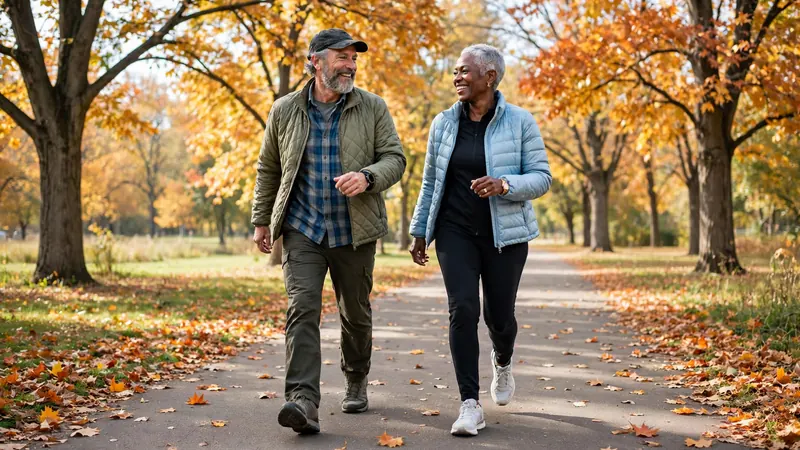
Adults over 50 in Oklahoma should aim for 150 minutes of moderate activity a week, strength training on 2 or more days and balance practice. Walk at sunrise in summer, when afternoons can top 100 degrees, keep an indoor routine ready for spring tornado season and winter ice storms, and use flat paved paths like the Oklahoma River Trails in OKC or River Parks in Tulsa.
Key takeaways
- Target: 150 minutes of moderate cardio weekly, strength on 2+ days and balance work (HHS).
- Oklahoma summers are very hot, so walk at sunrise and keep afternoons for indoor exercise.
- Spring is peak tornado season, and winter can bring ice storms: always have an indoor backup.
- Flat paved routes include the Oklahoma River Trails and Lake Hefner Trail in OKC and River Parks in Tulsa.
- Oklahoma has 11 Area Agencies on Aging that can connect you with senior centers and classes.
Oklahoma weather keeps you on your toes. Summer afternoons can top 100 degrees, spring brings tornado watches, the wind rarely lets up, and winter can coat everything in ice overnight. None of that has to stop you from staying active after 50. It just means you need a plan with a built-in indoor backup. Here is one that works from Tulsa to Lawton.
What should your weekly goal be?
The HHS Physical Activity Guidelines recommend that older adults get 150 minutes of moderate aerobic activity a week, muscle-strengthening activity on 2 or more days, and activities that improve balance. That is about 30 minutes on 5 days. Shorter bouts add up, so three 10-minute walks count the same as one 30-minute walk.
How does Oklahoma weather change your routine?
Summer: serious heat
From June through August, plan your outdoor walks for sunrise or shortly after. By midafternoon the heat is often too much for a safe workout. Wear a hat and light clothing, carry water, and turn back early if you feel lightheaded, nauseated or unusually tired. Some medicines for blood pressure and heart conditions make heat harder to handle, so ask your doctor.
Spring: tornado season
Spring, especially April through June, is the heart of Oklahoma's tornado season. Check the forecast before you head out, know where you would shelter, and do not start a long trail walk when storms are expected. On watch days, do your workout at home.
Wind
Oklahoma's steady wind turns a flat walk into a hill workout. Start your walk into the wind, so it is at your back on the way home when you are tired.
Winter: ice storms
Winters are mostly mild with sudden cold snaps, but ice storms can make roads and sidewalks dangerous. The CDC reports that about 1 in 4 adults 65 and older fall each year. When there is ice, stay in.
A sample seasonal weekly plan for Oklahoma
| Day | Summer (Jun-Aug) | Spring and fall | Winter (Dec-Feb) |
|---|---|---|---|
| Mon | Sunrise walk, 25-30 min | 30-min trail walk | Midday walk on dry days |
| Tue | Home routine (below) | Home routine (below) | Home routine (below) |
| Wed | Pool or water aerobics | 30-min walk + balance | Indoor walk at mall or rec center |
| Thu | Rest or stretching | Rest or stretching | Rest or stretching |
| Fri | Home routine (below) | Home routine (below) | Home routine (below) |
| Sat | Sunrise walk, 30-40 min | Longer walk, 45-60 min | Indoor walk or class |
| Sun | Indoor walk or seated cardio | Easy walk or tai chi | Easy home cardio |
For an indoor cardio session that works when it is 100 degrees outside, try our low-impact cardio at home routine.
A no-equipment indoor routine for storm or heat days
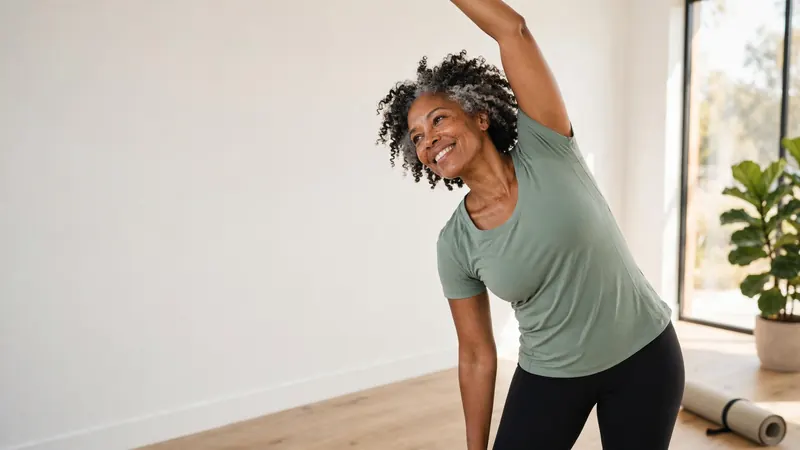
This routine needs no equipment, just a wall and a clear patch of floor. It takes about 15 minutes and covers strength and balance. Do it twice a week, and any day the weather keeps you home.
The exercises
Wall Sit (Partial)
Works: Thighs, glutes3 holds of 10-20 seconds
- Stand with your back against a wall, feet about a foot in front of you.
- Slide down a few inches, as if starting to sit.
- Hold, then slide back up.
- Make it easier
- Slide down only slightly.
- Make it harder
- Slide lower, keeping knees behind your toes, or hold longer.
- Safety tip
- Stop if you feel knee pain. Never go lower than a comfortable bend.
Wall Push-Up
Works: Chest, shoulders, arms2 sets of 10 reps
- Stand an arm's length from a wall, palms on the wall at shoulder height.
- Bend your elbows and lean your chest toward the wall.
- Push back to the start.
- Make it easier
- Stand closer to the wall.
- Make it harder
- Step your feet farther back.
- Safety tip
- Keep your body in a straight line and your feet from sliding.
Standing Knee Lift
Works: Hips, core, heart rate3 rounds of 1 minute, 30 seconds rest between
- Stand tall near a wall, one hand on it for support.
- Lift one knee toward your chest, then lower it.
- Alternate legs at a steady pace.
- Make it easier
- Lift your knees lower and slower.
- Make it harder
- Pump your arms and quicken the pace.
- Safety tip
- Ease off if you cannot speak in short sentences.
Clock Reach
Works: Balance5 reaches per side
- Stand beside a wall, one hand on it.
- Balancing on the leg nearest the wall, point the other foot forward, then to the side, then behind you.
- Return to center and switch sides.
- Make it easier
- Keep your toes on the floor as you reach.
- Make it harder
- Lift your foot off the floor with each reach.
- Safety tip
- Keep your hand on the wall the whole time.
Where can you walk in Oklahoma?
- Oklahoma River Trails, Oklahoma City: paved trails along both banks of the Oklahoma River, passing the Boathouse District. Flat and wide, with easy out-and-back options.
- Lake Hefner Trail, Oklahoma City: a paved path along Lake Hefner on the city's northwest side. Lake views are a bonus, but it can be very windy.
- River Parks, Tulsa: paved trails along both sides of the Arkansas River, with connections near the Gathering Place park.
Norman, Edmond, Broken Arrow and Stillwater also have city trails and park loops. Check with your parks department for the flattest one near you.
Indoor options
- Home: the routine above, plus our 10-minute daily workout for busy days.
- Malls: some malls open early for walkers, which helps in July. Ask the management office.
- Senior centers and nutrition sites: many Oklahoma communities have senior centers offering exercise classes alongside meals and social events.
- YMCAs and community centers: air-conditioned tracks and pools are ideal in summer.
Does Medicare help pay for exercise?
Original Medicare generally does not cover gym memberships. Some Medicare Advantage plans include fitness programs such as SilverSneakers or Renew Active, which may include gym access or online classes. Check whether your plan includes it before you join a gym.
Finding local help in Oklahoma
Oklahoma Human Services' Aging Services division works with 11 Area Agencies on Aging across the state. They can point you to senior centers, exercise programs, meals and transportation. Learn more on the state's Older Americans Act services page, or find your local agency through the Eldercare Locator.
When to talk to your doctor
Talk with your doctor before increasing activity if you have heart disease, uncontrolled blood pressure, diabetes, recent surgery, or chest pain, shortness of breath or dizziness with effort. The National Institute on Aging has more on staying safe while you exercise.
Frequently asked questions
When is it too hot to walk outside in Oklahoma?
There is no single cutoff, but heat-advisory days are a good signal to move your workout indoors. In summer, walk at sunrise, carry water and turn back if you feel dizzy or sick. Ask your doctor if your medicines affect how you handle heat.
Where can older adults walk in Oklahoma City?
The Oklahoma River Trails and the Lake Hefner Trail are both paved and flat. Shorter out-and-back walks work well, and early mornings help with heat and wind.
Does Medicare pay for SilverSneakers in Oklahoma?
Original Medicare usually does not. Some Medicare Advantage plans offered in Oklahoma include SilverSneakers, Renew Active or another fitness benefit. Check your plan to see whether it is included.
How many Area Agencies on Aging are in Oklahoma?
Oklahoma has 11 Area Agencies on Aging, each serving a group of counties. You can find yours through Oklahoma Human Services or by entering your ZIP code in the Eldercare Locator.
Sources
- HHS: Physical Activity Guidelines for Americans, 2nd edition
- CDC: Older Adult Fall Prevention
- NIA (NIH): Exercise and Physical Activity
- Oklahoma Human Services: Older Americans Act Title III Services
- U.S. Administration for Community Living: Eldercare Locator
Health note: This article is general information, not medical advice. If you have a heart condition, high blood pressure, diabetes, recent surgery, joint replacement or any symptoms such as chest pain, dizziness or unusual shortness of breath, talk to your doctor before starting. Stop any exercise that causes sharp pain. Read our full disclaimer.