Quick answer
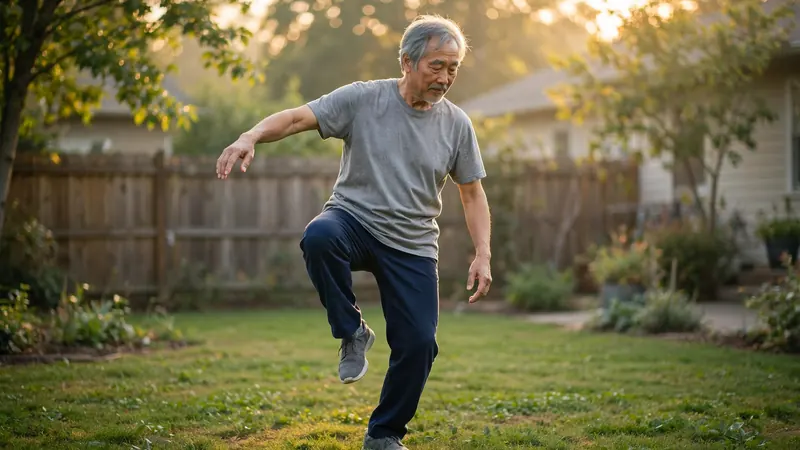
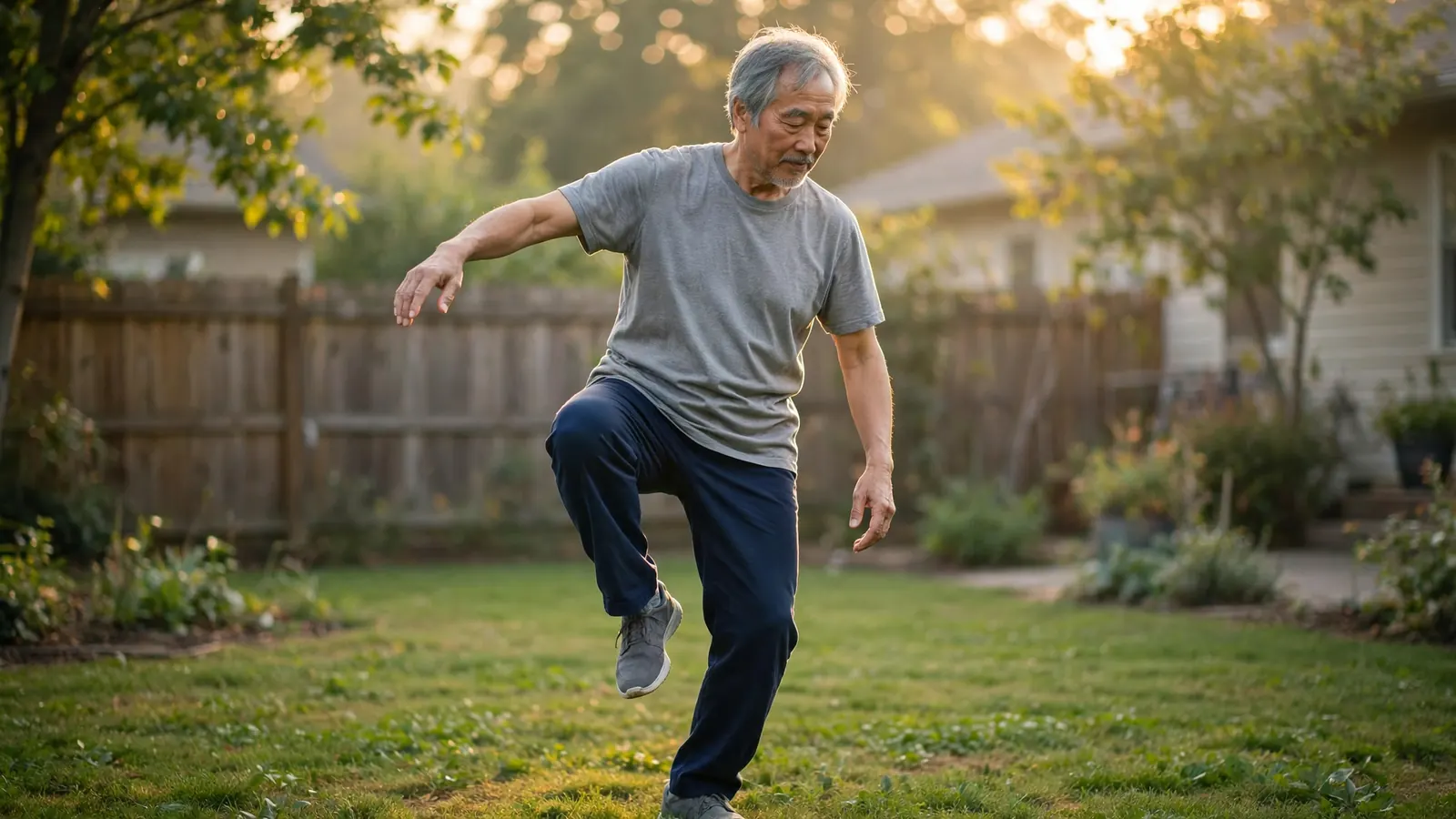
Tai chi is a low-impact practice of slow, flowing movements paired with deep breathing. Beginners over 50 can start with 10 to 15 minutes of basic moves, 2 to 3 days a week, with a sturdy chair nearby for support, and build toward 20 to 30 minutes. Research summarized by the NIH suggests tai chi may improve balance and help reduce falls in older adults.
Key takeaways
- Tai chi is low impact and can be adapted for almost any fitness level, including seated practice.
- NIH research summaries suggest tai chi may improve balance and stability in older adults.
- Start with 10–15 minutes, 2–3 days a week, and build gradually.
- Keep your knees soft and only bend as deep as is comfortable.
- A class with a qualified instructor helps you learn the movements correctly.
Tai chi looks calm from the outside, but it quietly trains the things that matter most as you get older: balance, leg strength, posture and focus. It is low impact, needs no equipment and can be done in a living room. This guide explains what tai chi is, what the research says, and gives you six simple moves and a 4-week plan to start.
What is tai chi?
Tai chi is a mind-body practice that began in China as a martial art. Today most people practice it for health. It is made of slow, flowing movements, called forms, that link together while you breathe deeply and stay relaxed. You shift your weight smoothly from one leg to the other, which is exactly the skill you need to stay steady when you turn, reach or step.
There are several styles. Yang style is the most widely taught, and many beginner and community classes use short, simplified forms. You do not need to memorize a long routine to benefit; a handful of basic movements practiced regularly is a solid start.
What are the benefits of tai chi after 50?
According to the National Center for Complementary and Integrative Health (NCCIH), part of the NIH, research suggests tai chi may help:
- Improve balance and stability in older adults and people with Parkinson's disease.
- Reduce falls in older adults.
- Ease pain from knee osteoarthritis and some types of back pain.
- Improve quality of life for people living with some chronic conditions.
Falls are a real concern: the CDC reports that about 1 in 4 adults 65 and older say they fall each year. The Physical Activity Guidelines for Americans also recommend that older adults include balance training as part of their weekly activity. Tai chi is one enjoyable way to do that. For a broader plan, see our guide to fall prevention exercises at home.
How does tai chi compare with other gentle exercise?
| Activity | Main focus | Impact on joints | Good for |
|---|---|---|---|
| Tai chi | Balance, weight shifting, posture | Very low | Steadiness and calm focus |
| Yoga | Flexibility, strength in held poses | Low | Mobility and relaxation |
| Walking | Aerobic fitness | Low | Heart health and endurance |
| Strength training | Muscle and bone strength | Low to moderate | Getting up, carrying, climbing stairs |
These activities work well together. Tai chi does not replace aerobic exercise or strength training, so keep walking and doing muscle-strengthening work on 2 or more days a week. If you are curious about a stretch-focused option, read our beginner's guide to yoga over 50.
How to stand and breathe in tai chi
Almost every movement starts from the same relaxed stance:
- Feet about shoulder-width apart, toes pointing forward.
- Knees slightly bent and soft, never locked.
- Hips relaxed, as if you are about to sit on a tall stool.
- Shoulders down, arms loose, head tall as if gently lifted by a string.
- Slow, easy breathing through the nose. Move at the speed of your breath.
Set a sturdy chair beside you so you can rest a hand on it whenever you need to. You can also do the arm movements while seated.
6 simple tai chi moves for beginners
These are simplified versions of classic tai chi movements. Move slowly, about 4 to 6 seconds for each part of a movement. Smoothness matters more than how far you move.
The exercises
Commencing Form (Raising the Arms)
Works: Posture, breathing, shoulders6–8 slow repetitions
- Stand in the relaxed stance with your arms at your sides, palms facing back.
- Breathe in as you slowly float both arms forward and up to shoulder height, wrists soft.
- Breathe out as you bend your knees slightly and let your arms sink back down to your hips.
- Make it easier
- Do it seated, or raise your arms only to chest height.
- Make it harder
- Slow each lift and lower to 6 seconds.
- Safety tip
- Keep your shoulders relaxed and do not raise your arms above shoulder height if it causes pain.
Weight Shifting Side to Side
Works: Balance, legs8–10 shifts each way
- Stand with feet a little wider than your shoulders and knees soft, one hand on a chair if needed.
- Slowly shift your weight onto your right leg until your left foot feels light.
- Shift back through the center and over to the left leg.
- Make it easier
- Make the shift smaller and keep both feet firmly planted.
- Make it harder
- At each side, lift the light heel off the floor for 2 seconds.
- Safety tip
- Keep your hips level and your knees over your toes.
Tai Chi Walking
Works: Balance, coordination10 slow steps, 2 lengths
- Stand alongside a counter with one hand resting on it.
- Shift your weight to your left leg, then step your right heel forward and slowly roll onto the whole foot.
- Shift your weight forward onto the right leg, then repeat with the other side.
- Make it easier
- Take shorter steps and keep a firm grip on the counter.
- Make it harder
- Pause for 2 seconds before each step.
- Safety tip
- Practice along a counter or wall, not in an open space, until you feel steady.
Wave Hands Like Clouds (Simplified)
Works: Trunk rotation, balance6–8 turns each way
- Stand with feet wider than your shoulders, knees soft.
- Raise your right hand to chest height, palm facing you, and your left hand to waist height, palm down.
- Turn your waist slowly to the right as your weight shifts right, then switch hand positions and turn to the left.
- Make it easier
- Do it seated, turning only from your waist.
- Make it harder
- Add a small side step as you shift your weight.
- Safety tip
- Turn from your waist and hips, not your knees. Keep the turn gentle.
Parting the Wild Horse's Mane (Simplified)
Works: Legs, balance, shoulders4–6 per side
- Stand with your weight on your left leg and hold your hands in front of your chest as if holding a ball.
- Step your right foot forward at a comfortable angle and shift your weight onto it.
- As you shift, sweep your right hand forward to shoulder height and your left hand down beside your left hip. Step back and repeat on the other side.
- Make it easier
- Keep your feet in place and only practice the weight shift and arm sweep.
- Make it harder
- Link the steps together and move forward across the room beside a counter.
- Safety tip
- Keep your stance comfortably wide, like standing on two train tracks, not a tightrope.
Closing Form
Works: Breathing, relaxation3 slow breaths
- Bring your feet back to shoulder-width apart.
- Breathe in as you float your hands up in front of you to chest height, palms down.
- Breathe out as you slowly press your hands down to your sides and straighten your knees.
- Make it easier
- Do it seated with your hands resting on your thighs.
- Make it harder
- Close your eyes for one breath only if you are holding a support.
- Safety tip
- Stand up slowly at the end of your practice if you have been in a bent-knee stance.
A 4-week tai chi starter plan
- Week 1: 10 minutes, 2 days. Practice the stance, breathing, Commencing Form and Weight Shifting.
- Week 2: 10–15 minutes, 3 days. Add Tai Chi Walking and Wave Hands Like Clouds.
- Week 3: 15 minutes, 3 days. Add Parting the Wild Horse's Mane. Link two or three moves together.
- Week 4: 15–20 minutes, 3 days. Practice all six moves in order, then finish with the Closing Form.
After a month, many people enjoy joining a class. Local senior centers, YMCAs and parks and recreation departments often offer beginner tai chi. A qualified instructor can correct your form, which is hard to judge on your own.
Safety first: who should check with a doctor?
NCCIH describes tai chi as generally safe, though some people get minor aches. Still, talk to your doctor before starting if you have a heart condition, uncontrolled blood pressure, recent surgery, a joint replacement, dizziness, or a history of falls. Keep these rules in mind:
- Bend your knees only as far as is comfortable. Your knees should stay in line with your toes.
- Do not twist through your knees. Turn from your hips and waist.
- Practice on a flat, non-slip floor in supportive shoes, or barefoot on a non-slip surface.
- Stop if you feel pain, dizziness or shortness of breath.
If standing practice is not right for you yet, you can do the arm movements from a chair, or try our chair yoga routine for another seated option.
Frequently asked questions
Is tai chi good exercise for people over 50?
Yes, for most people. It is low impact, gentle on the joints and trains balance and leg strength. NIH research summaries suggest it may improve balance and reduce falls in older adults.
How often should a beginner practice tai chi?
Start with 10 to 15 minutes, 2 to 3 days a week. As the moves become familiar, build toward 20 to 30 minutes most days. Regular practice matters more than long sessions.
Can I do tai chi sitting down?
Yes. Most of the arm movements, breathing and upper-body turns can be done from a sturdy chair. Seated tai chi is a good option if standing balance is limited or you are recovering from an injury.
Is tai chi better than yoga for balance?
Both can help. Tai chi focuses on slow weight shifting while moving, which closely matches everyday balance challenges. Yoga focuses more on flexibility and holding poses. Many people enjoy doing both.
Sources
Health note: This article is general information, not medical advice. If you have a heart condition, high blood pressure, diabetes, recent surgery, joint replacement or any symptoms such as chest pain, dizziness or unusual shortness of breath, talk to your doctor before starting. Stop any exercise that causes sharp pain. Read our full disclaimer.