Quick answer
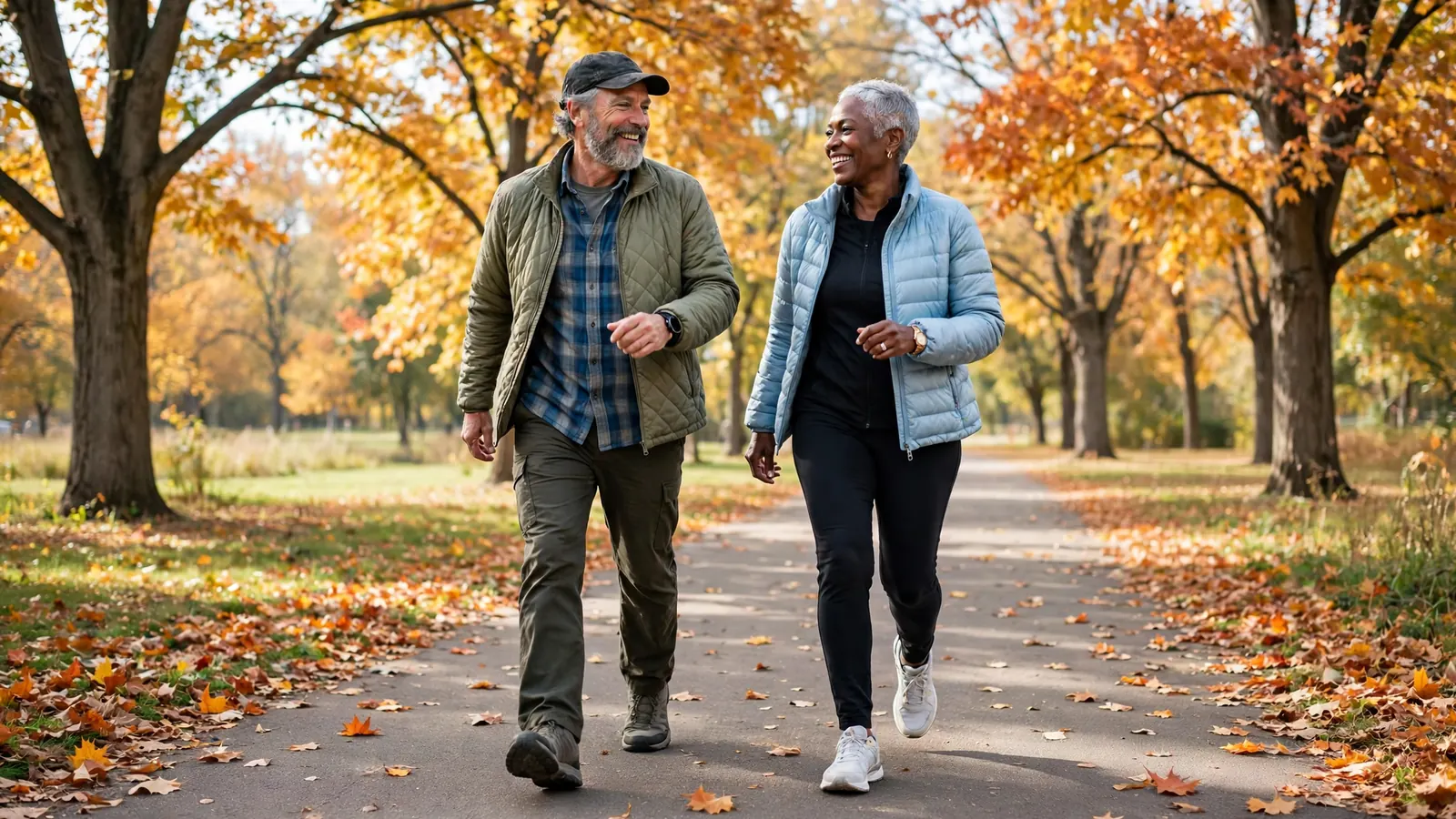
Adults over 50 in Kansas should aim for 150 minutes of moderate activity a week, strength training on 2 or more days and balance practice. Walk early in hot summer months, plan around spring storm season and winter ice, start walks into the wind, and use flat crushed-limestone routes like the Prairie Spirit Trail or the Flint Hills Trail for easy out-and-back walks.
Key takeaways
- Weekly target: 150 minutes of moderate cardio, strength on 2+ days and balance training (HHS).
- Kansas weather swings fast: hot summers, spring tornado season, ice in winter and wind year-round.
- Prairie Spirit Trail and Flint Hills Trail are state-park rail-trails with gentle grades.
- Original Medicare usually does not cover gyms, but some Medicare Advantage plans include fitness benefits.
- Kansas has 11 Area Agencies on Aging covering all 105 counties.
Kansas makes walking easy in one way: much of the state is gentle, open country, and former railroad lines have become long, level trails. It makes walking harder in others. The wind rarely quits, summers get hot, spring brings tornado watches and winter can turn roads to glass. If you are over 50, here is how to keep moving through all of it, whether you live in Wichita, Topeka or a small prairie town.
What is the right weekly target?
The HHS Physical Activity Guidelines recommend that older adults get 150 minutes of moderate aerobic activity a week, muscle-strengthening activity on 2 or more days, and balance training. A brisk 30-minute walk 5 days a week plus two home strength sessions meets that target. If you are starting out, 10-minute walks are a fine first step.
How does Kansas weather change your routine?
Wind, every season
Wind is part of life on the plains. Start your walk heading into the wind so it pushes you home when you are tired. On very gusty days, choose a sheltered route through a neighborhood or park, or walk indoors.
Summer heat
Kansas summers are hot, and humid in the eastern part of the state. Walk early in the morning, wear a hat, carry water, and move your workout indoors on heat-advisory days.
Spring storm season
Spring is peak season for severe thunderstorms and tornadoes. Check the forecast before longer walks, especially on rural trails far from shelter, and keep an indoor routine ready for watch days.
Winter ice
Winter can swing from mild afternoons to sudden ice and snow. The CDC reports that about 1 in 4 adults 65 and older fall each year, so when sidewalks are icy, stay inside.
A sample seasonal weekly plan for Kansas
| Day | Spring and fall | Summer | Winter |
|---|---|---|---|
| Mon | 30-min walk, into the wind first | Early 30-min walk | Midday walk on calm, dry days |
| Tue | Home routine (below) | Home routine indoors | Home routine (below) |
| Wed | 30-min walk + 5 min balance | Pool or water aerobics | Indoor walk at mall or rec center |
| Thu | Rest or stretching | Rest or stretching | Rest or chair yoga |
| Fri | Home routine (below) | Home routine indoors | Home routine (below) |
| Sat | Trail walk, 45-60 min | Early trail walk, 30-40 min | Indoor track or class |
| Sun | Easy walk | Easy indoor movement | Easy home cardio |
Want a ready-made schedule? Our weekly workout schedule for over 60 lays out each day.
A 4-move home routine for windy, stormy or icy days
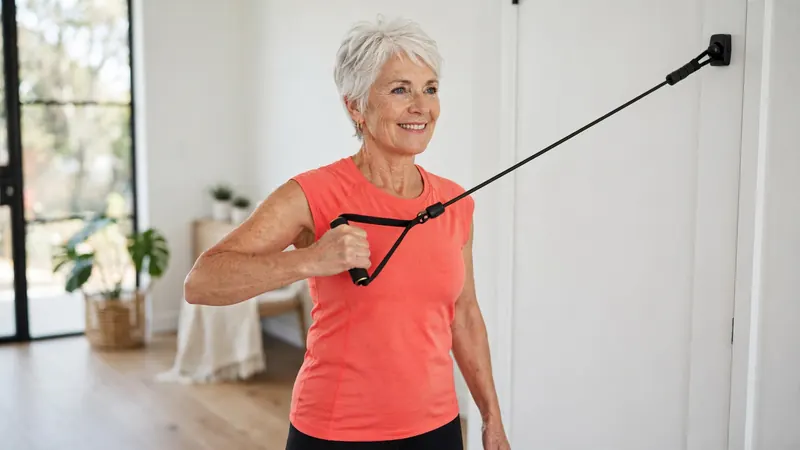
This 20-minute routine needs a sturdy chair and a resistance band. Do it twice a week.
The exercises
Chair Squat
Works: Thighs, glutes2 sets of 8-12 reps
- Stand in front of a sturdy chair, feet hip-width apart.
- Push your hips back and bend your knees until you lightly touch the seat.
- Press through your heels to stand up.
- Make it easier
- Sit fully between reps and use your hands.
- Make it harder
- Take 3 seconds to lower down.
- Safety tip
- Keep the chair against a wall.
Band Chest Press
Works: Chest, shoulders, arms2 sets of 10-12 reps
- Sit tall and wrap the band around the back of the chair or your upper back, holding an end in each hand at chest level.
- Press your hands straight forward until your arms are nearly straight.
- Return slowly.
- Make it easier
- Use a lighter band.
- Make it harder
- Use a heavier band or pause at full reach.
- Safety tip
- Check the band for tears before each use.
Seated Marching
Works: Hips, heart rate3 rounds of 1 minute, 30 seconds rest between
- Sit tall near the front of the chair.
- Lift one knee, lower it, then lift the other.
- Pump your arms and keep a steady rhythm.
- Make it easier
- Go slower with smaller lifts.
- Make it harder
- Stand and march in place, holding the chair.
- Safety tip
- Ease off if you cannot talk in short sentences.
Single-Leg Stand
Works: Balance3 holds of 10-20 seconds per leg
- Stand behind the chair, holding it with both hands.
- Lift one foot slightly off the floor.
- Hold, then switch legs.
- Make it easier
- Keep your toes lightly on the floor.
- Make it harder
- Hold the chair with only one hand.
- Safety tip
- Stay within reach of the chair.
Where can you walk in Kansas?
- Prairie Spirit Trail State Park: a rail-trail of about 51 miles between Ottawa and Iola in eastern Kansas, passing through Garnett. The crushed-limestone surface and gentle railroad grade make it comfortable for walking. Start from a trail town and walk out and back.
- Flint Hills Trail State Park: one of the longest rail-trails in the country, crossing the Flint Hills in eastern Kansas. Much of it is rural with few services, so stick to short segments near towns, bring water and tell someone your plans.
- Wichita river paths: paved paths follow the Arkansas River through Wichita, offering flat walks close to downtown.
Overland Park, Lawrence, Manhattan and Topeka also maintain paved trails and park loops. Your city parks department can point you to the closest level route.
Indoor options
- Home: the routine above, plus our hip mobility exercises to keep walking comfortable.
- Malls: some malls open early for walkers. Ask the management office.
- Senior centers: many Kansas towns, large and small, have senior centers with exercise classes and social activities.
- YMCAs and rec centers: indoor tracks and pools help on hot, windy or icy days.
Does Medicare cover fitness programs?
Original Medicare generally does not pay for gym memberships. Some Medicare Advantage plans include fitness programs such as SilverSneakers or Renew Active, which may include gym access or online classes. Check whether your plan includes it, as benefits vary by plan.
Finding local help in Kansas
The Kansas Department for Aging and Disability Services (KDADS) works with 11 Area Agencies on Aging that together serve every county in the state. They can connect you with senior centers, exercise programs, meals and transportation. You can also find your local agency through the Eldercare Locator.
When to talk to your doctor
Talk with your doctor before increasing activity if you have a heart condition, uncontrolled high blood pressure, diabetes, recent surgery, or chest pain, shortness of breath or dizziness with effort. Ask about heat if you take blood pressure or heart medicines. The National Institute on Aging has more on exercising safely.
Frequently asked questions
Is the Prairie Spirit Trail good for walking over 50?
Yes, for many people. It follows an old railroad bed, so grades are gentle, and the crushed-limestone surface is easy on the joints. Start from a trail town such as Ottawa, Garnett or Iola and walk a short distance out and back.
How do I exercise when it is too windy in Kansas?
Choose a sheltered neighborhood route, walk at a mall or rec center, or do a home routine of chair squats, band presses, seated marching and balance holds. On moderate wind days, start into the wind so it helps you home.
Does Medicare cover SilverSneakers in Kansas?
Original Medicare usually does not. Some Medicare Advantage plans in Kansas include SilverSneakers, Renew Active or a similar fitness benefit. Check your plan to see whether it is included.
How many Area Agencies on Aging are in Kansas?
Kansas has 11 Area Agencies on Aging that together cover all 105 counties. KDADS and the Eldercare Locator can help you find yours.
Sources
- HHS: Physical Activity Guidelines for Americans, 2nd edition
- CDC: Older Adult Fall Prevention
- NIA (NIH): Exercise and Physical Activity
- KDADS: Kansas Department for Aging and Disability Services
- U.S. Administration for Community Living: Eldercare Locator
Health note: This article is general information, not medical advice. If you have a heart condition, high blood pressure, diabetes, recent surgery, joint replacement or any symptoms such as chest pain, dizziness or unusual shortness of breath, talk to your doctor before starting. Stop any exercise that causes sharp pain. Read our full disclaimer.