Quick answer
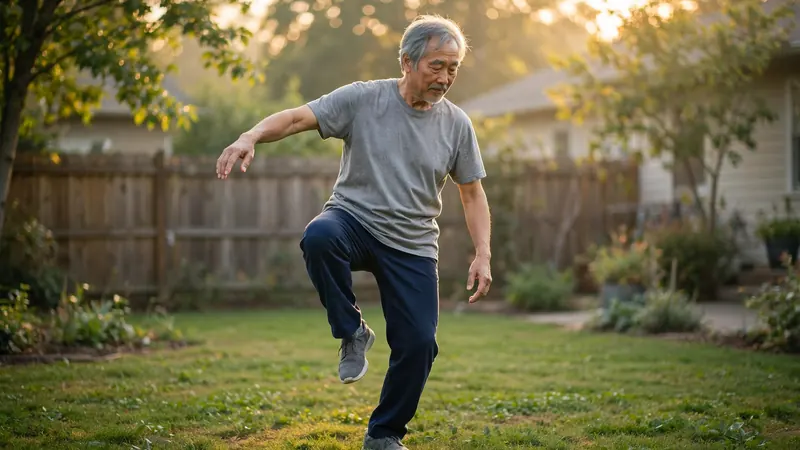
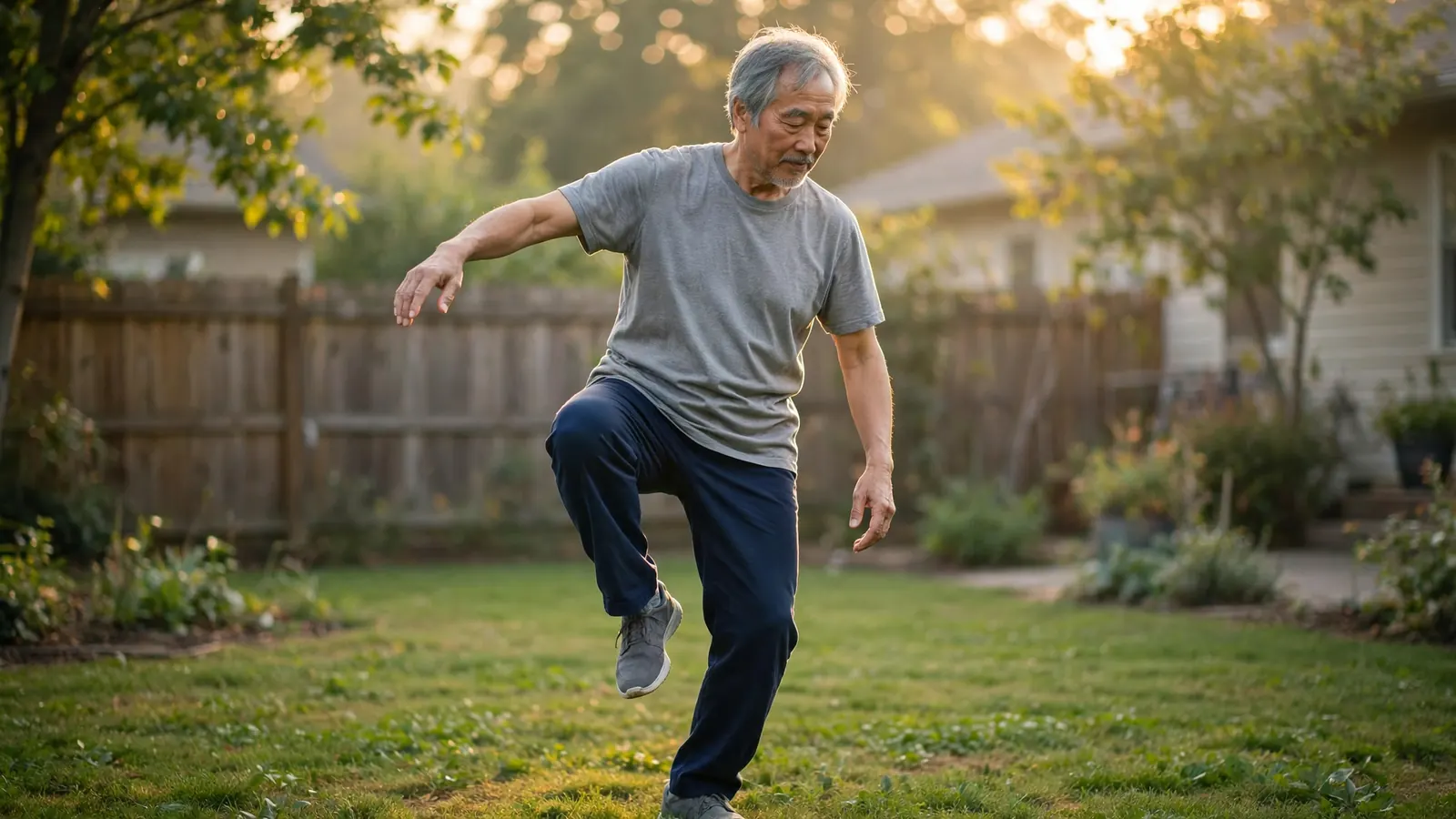
Good balance exercises for adults over 50 include weight shifts, tandem standing, standing on one foot, heel-to-toe walking, side and back leg raises, and sit-to-stands. Practice for 10-15 minutes on most days, holding a counter or sturdy chair. Hold each position for 10-30 seconds and use less hand support as you get steadier.
Key takeaways
- About 1 in 4 adults 65+ report a fall each year (CDC); balance and strength exercise help lower the risk.
- HHS guidelines recommend balance training as part of older adults’ weekly activity.
- Practice 10-15 minutes on most days, always next to a counter or sturdy chair.
- Progress by reducing hand support, then holding longer, then closing your eyes (only with support).
Balance is a skill, and like any skill it improves with practice at any age. A few minutes of balance exercises most days can help you feel steadier on stairs, uneven sidewalks and icy driveways. This guide gives you 7 simple moves you can do in your kitchen, how often to practice, and how to make them harder safely as you improve.
Why does balance matter more after 50?
Several changes that come with age affect balance: muscle strength declines, reaction time slows, and vision and inner-ear function can change. Some medications can also cause dizziness. The result shows up in the numbers: the CDC reports that about 1 in 4 adults age 65 and older report falling each year, and it recommends strength and balance exercises as one of the main ways to prevent falls.
The Physical Activity Guidelines for Americans recommend that older adults include balance training as part of multicomponent physical activity, alongside aerobic and muscle-strengthening activity. Starting in your 50s means you build that habit before you need it.
How often should you do balance exercises?
Aim for 10-15 minutes on most days of the week. Balance work is low intensity, so unlike strength training, you do not need rest days between sessions. Short, frequent practice works well. Many people pair it with daily routines:
- Stand on one foot while brushing your teeth, holding the sink.
- Do heel-to-toe steps down the hallway on your way to the kitchen.
- Practice tandem standing while waiting for the coffee to brew.
The National Institute on Aging notes that many lower-body strength exercises also improve balance, so the leg moves in this routine do double duty.
Set up a safe practice space
- Stand next to a kitchen counter or a sturdy chair that will not slide. Keep a hand on it or hovering just above it.
- Clear the floor of rugs, cords and clutter.
- Wear supportive, non-slip shoes, or practice barefoot on a non-slip surface if your feet are healthy.
- If you are unsteady, have someone nearby the first few times.
The 7 balance exercises
Do the moves in order, from easiest to hardest. Hold static positions for 10-30 seconds and repeat 2-3 times on each side.
The exercises
Weight Shift
Works: Ankles, hips, balance control5 shifts per side, holding each for 5-10 seconds
- Stand with feet hip-width apart, holding a counter with both hands.
- Slowly shift your weight onto your right foot, letting your left foot become light, and hold.
- Shift back to center, then to the left foot.
- Make it easier
- Shift only partway.
- Make it harder
- Lift the light foot an inch off the floor when you shift.
- Safety tip
- Keep both hands on the counter until this feels easy.
Tandem Stand
Works: Ankles, hips, balance2-3 holds of 10-30 seconds per side
- Stand at a counter and place one foot directly in front of the other, heel touching toe, as if on a tightrope.
- Stand tall with eyes looking straight ahead.
- Hold, then switch which foot is in front.
- Make it easier
- Use a semi-tandem stance, with the front heel beside the big toe of the back foot.
- Make it harder
- Reduce hand support to one fingertip, then hover.
- Safety tip
- Keep the counter within reach at all times.
Single-Leg Stand
Works: Hips, ankles, core2-3 holds of 10-30 seconds per leg
- Stand at a counter holding on with one or both hands.
- Lift your right foot a few inches off the floor and balance on your left leg.
- Hold, lower your foot, then switch legs.
- Make it easier
- Rest the toes of the lifted foot lightly on the floor.
- Make it harder
- Use less hand support, or slowly turn your head left and right.
- Safety tip
- Keep a soft bend in the standing knee and stop if you start to tip.
Heel-to-Toe Walk
Works: Dynamic balance, coordination2-3 passes of 10-20 steps
- Stand at one end of a counter or hallway, with one hand on the counter or wall.
- Step forward so the heel of your front foot touches the toes of your back foot.
- Take 10-20 steps this way, looking ahead rather than at your feet.
- Make it easier
- Leave a small gap between heel and toe.
- Make it harder
- Walk with your hand hovering above the counter.
- Safety tip
- Use a hallway narrow enough to reach a wall on both sides, and keep it clear.
Side Leg Raise
Works: Outer hips, balance1-2 sets of 10-15 reps per leg
- Stand behind a sturdy chair, holding on, with feet slightly apart.
- Slowly lift your right leg out to the side 6-12 inches, keeping your body upright and toes forward.
- Lower slowly. Finish all reps, then switch legs.
- Make it easier
- Make the movement smaller.
- Make it harder
- Hold the top for 2-3 seconds or use less hand support.
- Safety tip
- Do not lean your upper body to the side.
Back Leg Raise
Works: Glutes, lower back, balance1-2 sets of 10-15 reps per leg
- Stand behind a sturdy chair, holding on with both hands.
- Keeping your leg straight, slowly lift your right leg straight back a few inches.
- Hold for 1 second, lower slowly, and finish all reps before switching legs.
- Make it easier
- Lift the leg only an inch or two.
- Make it harder
- Hold the top for 3 seconds or use one hand for support.
- Safety tip
- Keep your upper body upright; do not lean forward or arch your back.
Sit-to-Stand (No Hands)
Works: Thighs, glutes, balance1-2 sets of 8-12 reps
- Sit near the front of a sturdy chair with feet flat and hip-width apart, arms crossed over your chest.
- Lean forward slightly and stand up without using your hands, then pause and find your balance.
- Sit back down slowly.
- Make it easier
- Use your hands on your thighs or the armrests.
- Make it harder
- Pause for 3 seconds at the top with feet close together.
- Safety tip
- Brace the chair against a wall so it cannot slide.
How do you progress balance exercises safely?
Make one change at a time, and only when you can hold the current version for 30 seconds without wobbling or grabbing for support. Work through these steps:
| Stage | Hand support | Example goal |
|---|---|---|
| 1 | Two hands on counter | Hold tandem stand for 30 seconds |
| 2 | One hand on counter | Hold single-leg stand for 15-30 seconds |
| 3 | One fingertip | Hold single-leg stand for 30 seconds |
| 4 | Hands hovering above counter | Hold single-leg stand for 30 seconds |
| 5 | Hands hovering, add movement | Turn your head slowly side to side while balancing |
Closing your eyes makes any balance move much harder because you lose visual cues. Only try it once stage 4 feels easy, with both hands lightly on the counter, and open your eyes the moment you feel unsteady.
Tai chi is another well-studied way to build balance, and the NIA lists it as a balance activity. See our tai chi guide for beginners if you want a flowing alternative to these drills.
Safety first: when to talk to your doctor
Talk to your doctor before starting a balance program if you have fallen in the past year, often feel dizzy or lightheaded, have numbness in your feet, or have an inner-ear condition. The CDC also recommends asking your doctor or pharmacist to review your medications for side effects like dizziness and getting your eyes checked once a year, since both affect fall risk. MedlinePlus has more on common causes of balance problems.
Stop and sit down if you feel faint, dizzy or short of breath during practice.
How do you know your balance is improving?
Track a simple number once a week: how many seconds you can hold a single-leg stand on each side with your current level of hand support. Write it down. Other signs are just as meaningful in daily life:
- You reach for the counter or railing less often when you turn or change direction.
- Putting on pants or shoes while standing feels steadier.
- You feel more confident on stairs, curbs and uneven ground.
It is normal for one side to be steadier than the other. Give the weaker side an extra hold each session.
Combine balance with strength for the best results
Balance depends on strong legs and hips. Add our bodyweight leg workout 2-3 days a week, and for a fuller plan, read our fall prevention exercises at home.
Frequently asked questions
What is the best balance exercise for people over 50?
Standing on one foot while holding a counter is one of the simplest and most useful because it mimics the moment of every step when you are on one leg. Pair it with heel-to-toe walking and sit-to-stands for a well-rounded routine.
How long should I be able to stand on one leg?
A practical goal is to hold a single-leg stand for 30 seconds with light or no hand support. If you cannot yet, that is common; practice with a hand on the counter and your time will usually improve with regular practice.
Can balance be improved after 60?
Yes. Balance responds to practice at any age. The CDC recommends strength and balance exercises to help prevent falls, and the NIA lists balance exercises as one of the four types of activity older adults need.
Should I do balance exercises every day?
You can. Balance exercises are low intensity, so short daily practice of 10-15 minutes is safe for most people. Always practice next to a counter or sturdy chair.
Sources
- CDC: Older Adult Fall Prevention
- HHS: Physical Activity Guidelines for Americans
- National Institute on Aging (NIH): Exercise and Physical Activity
- MedlinePlus (NIH): Balance Problems
Health note: This article is general information, not medical advice. If you have a heart condition, high blood pressure, diabetes, recent surgery, joint replacement or any symptoms such as chest pain, dizziness or unusual shortness of breath, talk to your doctor before starting. Stop any exercise that causes sharp pain. Read our full disclaimer.