Quick answer
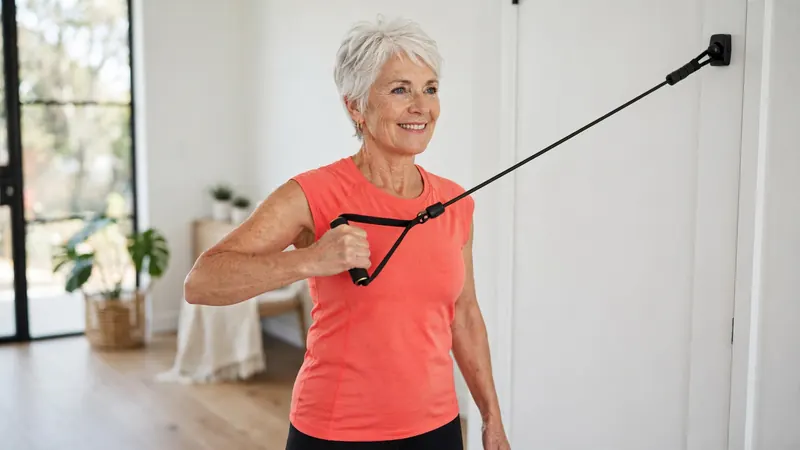
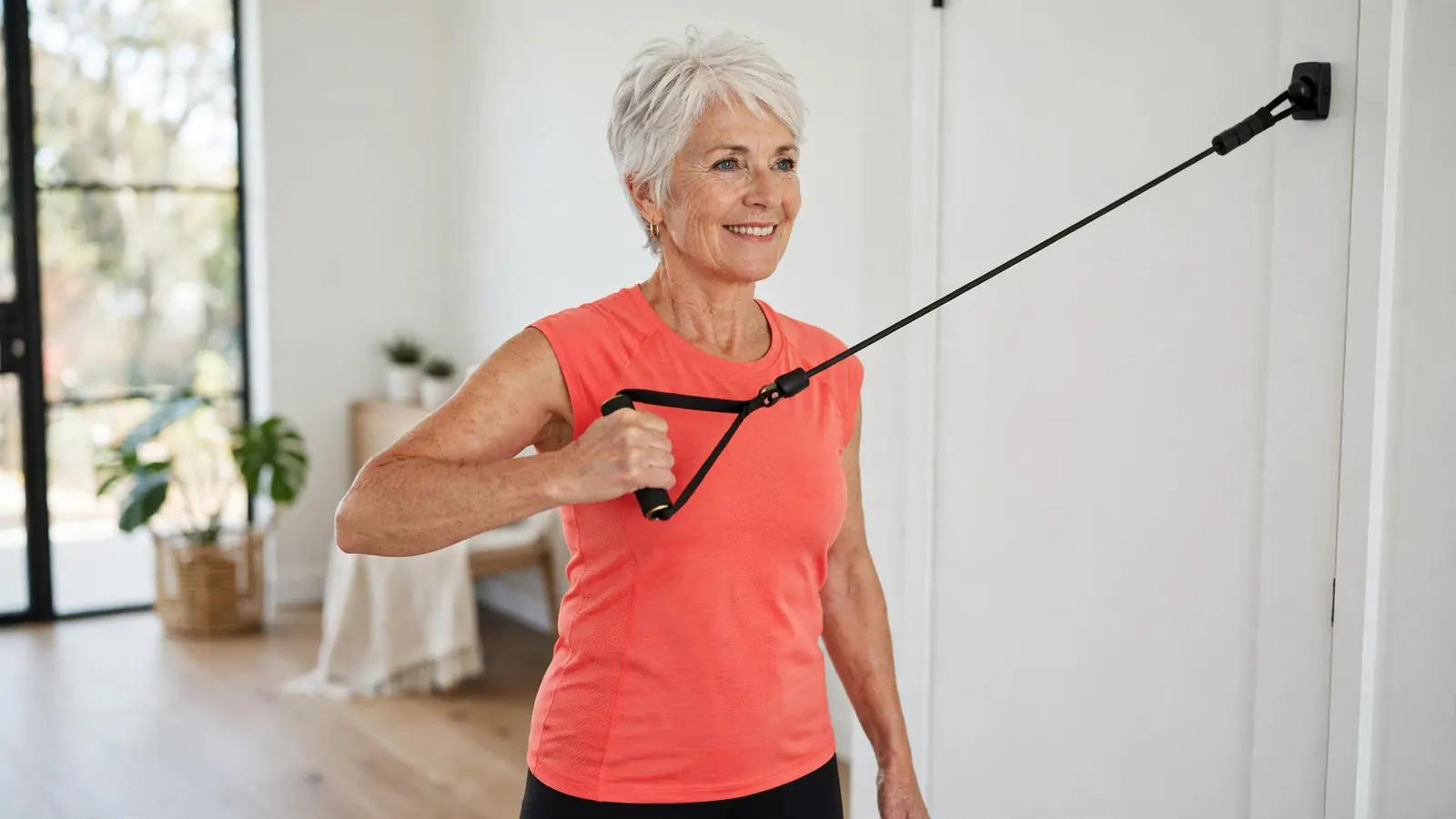
Adults over 50 should do muscle-strengthening exercise at least 2 days a week, working all major muscle groups, according to federal HHS guidelines. Beginners can start with 1 set of 8-12 reps of 6-8 basic moves, such as sit-to-stands, wall push-ups and rows, then build to 2-3 sets. Rest a day between sessions and add reps before adding weight.
Key takeaways
- Train all major muscle groups at least 2 non-consecutive days a week (HHS).
- Start with 1 set of 8-12 reps per move and build to 2-3 sets over several weeks.
- Pick a weight or version where the last 2 reps feel hard but your form stays clean.
- Progress one thing at a time: reps first, then sets, then a harder version or heavier weight.
- Breathe out as you lift and never hold your breath.
Strength training is one of the most useful things you can do for your body after 50. It keeps everyday jobs like climbing stairs, carrying groceries and getting up from a low couch easier, and you can do all of it at home with a chair, a wall and a pair of light dumbbells. This guide covers why muscle fades with age, how often to train, how many sets and reps to do, how to progress, and the 7 moves to learn first.
Why do we lose muscle after 50?
Muscle mass and strength naturally decline with age, a process called sarcopenia. Harvard Health notes that adults can lose about 3% to 5% of their muscle mass per decade after age 30, and the loss tends to speed up later in life. Inactivity makes it worse: muscles that are not challenged shrink faster.
The good news is that muscle still responds to training at any age. The National Institute on Aging (NIA) lists strength exercise as one of the four types of activity older adults need, alongside endurance, balance and flexibility, because stronger muscles help you stay independent with everyday activities.
How many days a week should you strength train?
The Physical Activity Guidelines for Americans from HHS recommend muscle-strengthening activity on 2 or more days a week, working all major muscle groups: legs, hips, back, abdomen, chest, shoulders and arms. The CDC adds that older adults should also get 150 minutes a week of moderate aerobic activity and include balance training.
The NIA advises against working the same muscle group two days in a row, so space your sessions out. A simple beginner week looks like this:
| Day | What to do | Time |
|---|---|---|
| Monday | Full-body strength (the 7 moves below) | 20-30 min |
| Tuesday | Brisk walk + balance practice | 20-30 min |
| Wednesday | Rest or gentle stretching | 10 min |
| Thursday | Full-body strength | 20-30 min |
| Friday | Brisk walk | 20-30 min |
| Weekend | Optional third strength day or an active outing | As you like |
How many sets and reps should a beginner do?
Aim for 8-12 repetitions of each exercise. HHS guidelines say muscle-strengthening activity works best when you continue until it would be hard to do another rep without help. In plain terms: the last 2 reps should feel like real work, but you should still be able to keep good form.
- Weeks 1-2: 1 set of each move. Learn the form and notice how your body feels the next day.
- Weeks 3-4: 2 sets of each move, with 60-90 seconds of rest between sets.
- Week 5 onward: 2-3 sets, adjusting the difficulty so 8-12 reps stays challenging.
Move slowly. The NIA suggests taking about 3 seconds to lift and about 3 seconds to lower. Slow reps are safer for joints and work the muscle harder than fast, swinging ones.
How do you progress safely?
Progress means making an exercise a little harder once it starts to feel easy. Change only one thing at a time, and only when you can complete every rep with good form.
| Step | Change | Move on when |
|---|---|---|
| 1 | Add reps, up to 12 | 12 clean reps feel manageable |
| 2 | Add a second, then third set | 3 sets of 12 feel steady |
| 3 | Use a harder version or add 1-2 lbs | Drop back to 8 reps and rebuild |
Keep a simple log of the move, the weight and the reps. Seeing the numbers rise over a few weeks is good motivation, and it tells you exactly when to step up.
The 7 core moves to learn first
These moves cover every major muscle group with little or no equipment. Do them in order as one full-body session. If you have no dumbbells yet, use filled water bottles or a resistance band for the row and press.
The exercises
Sit-to-Stand
Works: Thighs, glutes1-3 sets of 8-12 reps
- Sit near the front of a sturdy chair, feet flat and hip-width apart.
- Lean your chest slightly forward and press through your heels to stand up tall.
- Slowly sit back down, taking about 3 seconds to lower.
- Make it easier
- Use your hands on the armrests or add a firm cushion to raise the seat.
- Make it harder
- Cross your arms over your chest or hold a dumbbell at your chest.
- Safety tip
- Keep knees pointing in the same direction as your toes. Make sure the chair cannot slide.
Wall Push-Up
Works: Chest, shoulders, triceps1-3 sets of 8-12 reps
- Stand an arm’s length from a wall and place your palms on it at shoulder height.
- Keeping your body straight from head to heels, bend your elbows and bring your chest toward the wall.
- Push back to the start, breathing out as you push.
- Make it easier
- Stand a little closer to the wall.
- Make it harder
- Step your feet farther back, or move to a kitchen counter.
- Safety tip
- Keep wrists in line under your hands and do not let your hips sag.
One-Arm Dumbbell Row
Works: Upper back, biceps1-3 sets of 8-12 reps per side
- Place your left hand on a chair seat or counter, step back and hinge forward with a flat back.
- Hold a light dumbbell in your right hand with your arm hanging straight down.
- Pull your elbow back toward your hip, squeeze your shoulder blade, then lower slowly. Switch sides.
- Make it easier
- Use a filled water bottle or no weight.
- Make it harder
- Increase the weight by 1-2 lbs.
- Safety tip
- Keep your back flat and your neck long. Skip the forward hinge if your doctor has advised against bending forward.
Seated Overhead Press
Works: Shoulders, triceps1-3 sets of 8-12 reps
- Sit tall in a chair holding a light dumbbell in each hand at shoulder height, palms facing forward.
- Press the weights up until your arms are nearly straight, without locking your elbows.
- Lower slowly back to shoulder height.
- Make it easier
- Press one arm at a time or use no weight.
- Make it harder
- Do it standing, or add 1-2 lbs.
- Safety tip
- Only press as high as is pain-free. Stop if you feel pinching in the shoulder.
Glute Bridge
Works: Glutes, hamstrings, lower back1-3 sets of 8-12 reps
- Lie on your back on a mat or bed with knees bent and feet flat, hip-width apart.
- Squeeze your glutes and lift your hips until your body forms a line from shoulders to knees.
- Hold for 2 seconds, then lower slowly.
- Make it easier
- Lift your hips only a few inches.
- Make it harder
- Hold the top for 5 seconds, or march one foot up at the top.
- Safety tip
- Lift with your glutes, not by arching your lower back.
Standing Calf Raise
Works: Calves, ankles1-3 sets of 10-15 reps
- Stand behind a chair or at a counter, holding on lightly.
- Rise up onto the balls of your feet as high as is comfortable.
- Pause, then lower your heels slowly to the floor.
- Make it easier
- Hold on with both hands and rise only partway.
- Make it harder
- Hold on with one fingertip, or do one leg at a time.
- Safety tip
- Keep a hand near support at all times.
Bird Dog
Works: Core, back, glutes1-2 sets of 6-8 reps per side
- Start on hands and knees on a mat, hands under shoulders and knees under hips.
- Slowly reach your right arm forward and your left leg back, keeping your hips level.
- Hold for 2-3 seconds, return, and switch sides.
- Make it easier
- Lift only the arm or only the leg.
- Make it harder
- Hold each rep for 5 seconds.
- Safety tip
- Pad your knees. If getting to the floor is hard, stand at a wall and lift alternate arms and legs instead.
What equipment do you need?
You can start with nothing but a sturdy chair without wheels and a clear wall. When bodyweight moves get easy, a set of light dumbbells (3, 5 and 8 lbs covers most beginners) or a light-to-medium resistance band adds plenty of challenge. Wear supportive shoes and train on a non-slip floor. For more lower-body options, see our bodyweight leg workout.
Safety first: when to talk to your doctor
Strength training is safe for most people, but check with your doctor before starting if you have a heart condition, uncontrolled high blood pressure, recent surgery or a joint replacement, osteoporosis, or unexplained dizziness or chest pain. Our guide to exercise with high blood pressure covers extra precautions.
- Breathe. Breathe out as you lift or push and in as you lower. The NIA warns against holding your breath during strength exercises.
- Know effort from pain. Muscle burning and mild soreness a day or two later are normal. Sharp, sudden or joint pain is a signal to stop.
- Warm up. March in place and roll your shoulders for 3-5 minutes first.
- Stop right away and seek care if you feel chest pain, severe shortness of breath or lightheadedness.
Your first two weeks
Pick two days, such as Monday and Thursday. Do 1 set of each of the 7 moves, write down your reps, and walk on the days in between. By week 3, add the second set. If you want a day-by-day schedule, follow our 4-week beginner workout plan.
Frequently asked questions
Is it too late to start strength training at 60 or 70?
No. Muscles respond to training at any age, and the NIA recommends strength exercise for older adults to help with everyday activities. Start with bodyweight moves and 1 set of each, then build gradually.
How often should a beginner over 50 lift weights?
At least 2 days a week, working all major muscle groups, per HHS guidelines. Leave a rest day between sessions that work the same muscles, such as Monday and Thursday.
How heavy should my dumbbells be?
Choose a weight you can lift 8-12 times with good form where the last 2 reps feel hard. Many beginners start with 3-8 lbs for upper-body moves. If you cannot do 8 reps, go lighter; if 12 feels easy, go up 1-2 lbs.
Should I be sore after strength training?
Mild muscle soreness for a day or two is common when you start or change your routine. Sharp pain, joint pain or soreness that lasts longer than a few days means you should ease off and check with your doctor.
Sources
- HHS: Physical Activity Guidelines for Americans
- CDC: Older Adult Activity: An Overview
- National Institute on Aging (NIH): Exercise and Physical Activity
- Harvard Health Publishing: Preserve your muscle mass
Health note: This article is general information, not medical advice. If you have a heart condition, high blood pressure, diabetes, recent surgery, joint replacement or any symptoms such as chest pain, dizziness or unusual shortness of breath, talk to your doctor before starting. Stop any exercise that causes sharp pain. Read our full disclaimer.