Quick answer
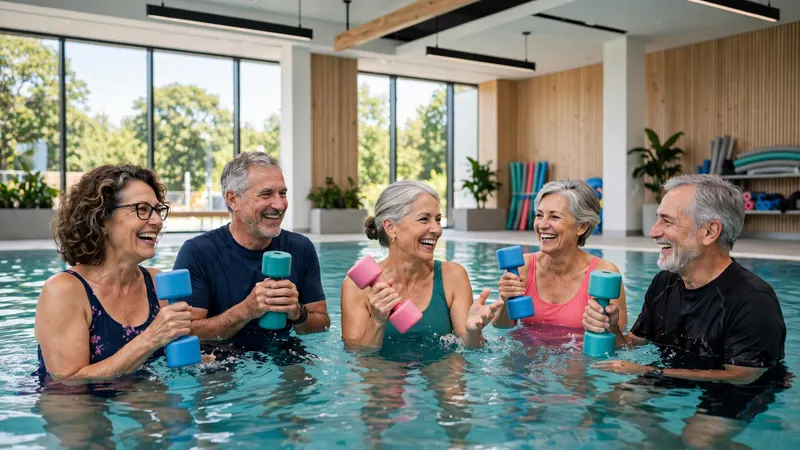
Swimming and water aerobics are low-impact cardio: the water supports your weight, so they are easy on the hips, knees and back. Both count toward the 150 minutes of moderate activity a week that HHS recommends. Beginners can start with 2-3 sessions of 20-30 minutes a week in waist- to chest-deep water. You do not need to know how to swim for water aerobics.
Key takeaways
- Water exercise is low-impact and counts toward 150 minutes of weekly cardio.
- Water aerobics and water walking happen in shallow water; no swimming skills needed.
- Start with 2-3 sessions of 20-30 minutes a week and build up.
- Swim where a lifeguard is on duty or with a buddy.
- You still sweat in the pool, so drink water before and after.
If walking or standing exercise bothers your joints, the pool may be the answer. Water supports much of your body weight, so you can move more freely, while the water itself provides gentle resistance in every direction. Here is how to get started with swimming, water walking and water aerobics after 50.
Why is water exercise good after 50?
- It is low-impact. Buoyancy takes pressure off the hips, knees, ankles and back.
- It counts as cardio. The CDC lists water aerobics among moderate-intensity activities for older adults, and swimming laps can be moderate or vigorous depending on your pace.
- It builds some strength. Pushing and pulling against water works your muscles. It does not fully replace strength training, but it helps.
- It is popular with people who have arthritis. The Arthritis Foundation recommends water exercise as a joint-friendly option, and warm-water pools can feel especially comfortable for stiff joints.
The Physical Activity Guidelines for Americans recommend 150 minutes of moderate aerobic activity each week, plus muscle-strengthening on 2 or more days and balance activities for older adults. Pool sessions can cover a big share of the aerobic goal.
Swimming, water walking or water aerobics: which should you choose?
| Activity | Swimming skill needed | Water depth | Best for |
|---|---|---|---|
| Water walking | None | Waist to chest | Complete beginners, balance practice |
| Water aerobics class | None | Waist to chest | Structure, music and company |
| Lap swimming | Yes | Lap lanes | Confident swimmers wanting a full-body workout |
| Deep-water jogging | Some comfort in deep water | Deep end, with a flotation belt | Zero impact on the joints |
Many community pools, YMCAs and recreation centers offer water aerobics classes. Some Medicare Advantage plans include fitness programs such as SilverSneakers or Renew Active that may cover pool access, so check whether your plan includes it.
A 30-minute shallow-water workout
Stand in waist- to chest-deep water near the pool wall. Walk for 5 minutes to warm up. Then do each move below for 1-2 minutes, rest briefly, and repeat the circuit 2-3 times. Finish with 5 minutes of easy water walking.
The exercises
Water Walking
Works: Legs, hips, heart rate2 minutes per circuit
- Stand in waist- to chest-deep water.
- Walk forward with long steps, pressing heel then toe onto the pool floor.
- Swing your arms through the water, then walk backward to return.
- Make it easier
- Walk in shallower water with one hand on the wall.
- Make it harder
- Walk faster, lift your knees higher or walk in deeper water.
- Safety tip
- Wear water shoes for grip on the pool floor.
Side Stepping
Works: Outer hips, thighs1-2 minutes per circuit
- Face the pool wall or stand sideways in the lane.
- Step to the side, then bring the other foot to meet it.
- Take 10 steps one way, then 10 steps back.
- Make it easier
- Take small steps holding the wall.
- Make it harder
- Take wider steps and squat slightly as you step.
- Safety tip
- Keep toes pointing forward and move slowly.
Knee Lifts
Works: Hips, core, thighs1 minute per circuit
- Stand with your side to the wall, one hand on the edge.
- Lift one knee toward hip height, then lower it.
- Alternate legs in a steady marching rhythm.
- Make it easier
- Lift knees only partway.
- Make it harder
- Let go of the wall and march faster.
- Safety tip
- Keep your back upright; do not lean back.
Leg Swings at the Wall
Works: Hips, glutes10-15 swings per leg
- Hold the pool wall with one hand, standing sideways to it.
- Swing your outside leg forward and back in a smooth arc.
- Do 10-15 swings, then turn around and switch legs.
- Make it easier
- Use a smaller swing.
- Make it harder
- Swing a little faster to add water resistance.
- Safety tip
- Keep the movement controlled and pain-free.
Arm Sweeps
Works: Chest, upper back, shoulders1 minute per circuit
- Stand with water at shoulder level and knees slightly bent.
- Hold your arms out to the sides just under the surface, palms forward.
- Sweep your arms together in front of you, turn your palms, and sweep them back out.
- Make it easier
- Move slowly with slightly bent elbows.
- Make it harder
- Cup your hands and move faster for more resistance.
- Safety tip
- Stop if you feel shoulder pinching.
Pool Wall Push-Up
Works: Chest, arms2 sets of 8-12 reps
- Face the pool wall and place your hands on the edge, shoulder-width apart.
- Bend your elbows to bring your chest toward the wall.
- Push back to straight arms.
- Make it easier
- Stand closer to the wall.
- Make it harder
- Step your feet farther back.
- Safety tip
- Keep your body in a straight line; do not let your hips sag.
How do you start if you are new to swimming?
- Start with water walking. Spend your first few sessions getting comfortable with walking forward, backward and sideways in the shallow end.
- Take a class or lessons. Many pools offer adult swim lessons. It is never too late to learn.
- Use simple gear. A kickboard, pool noodle or flotation belt adds support. Water shoes give you grip on the pool floor and deck.
- Build gradually. Start with 2-3 sessions of 20-30 minutes a week. Add 5 minutes or a session when it feels easy.
What should you bring to the pool?
- Water shoes: they protect your feet and give grip on wet floors and steps.
- A water bottle: keep it at the pool edge and sip during breaks.
- Goggles: helpful for lap swimming and for eyes sensitive to pool water.
- A towel and warm layer: you can get chilled quickly after you leave the water, especially in winter.
- A flotation belt or noodle: many pools lend these, so ask before you buy.
How hard should a pool workout feel?
Water keeps you cool, so it is easy to underestimate effort. Use the talk test: at a moderate level you can talk but not sing. Moving your arms and legs faster or making bigger movements increases the water's resistance and the challenge.
Safety first in and around the pool
- Swim where a lifeguard is on duty, or always with a buddy. The CDC Healthy Swimming pages have more on staying safe in pools.
- Stay in water at a depth that matches your skills.
- Pool decks are slippery. Walk slowly, use handrails on steps and ladders, and wear water shoes. Falls are common for older adults, with about 1 in 4 adults 65+ reporting a fall each year, according to the CDC.
- Drink water before and after. You still sweat in the pool.
- Outdoor pools: use sunscreen and avoid the hottest part of the day.
Talk to your doctor before starting if you have a heart condition, uncontrolled blood pressure, a seizure disorder, open wounds, or recent surgery. Get out of the water and seek help for chest pain, dizziness or unusual shortness of breath.
What to do on non-pool days
On days you cannot get to a pool, try a low-impact cardio workout at home or a short walk. For joint-specific advice, see our guide to exercises for knee arthritis.
Frequently asked questions
Is swimming good exercise for people over 50?
Yes. Swimming is low-impact cardio that works the whole body and counts toward the 150 minutes of weekly activity HHS recommends. It is a good fit if land-based exercise bothers your joints.
Can I do water aerobics if I cannot swim?
Yes. Water aerobics and water walking are done in shallow water, usually waist- to chest-deep, where you can stand. Let the instructor know you are a non-swimmer and stay away from the deep end.
How often should I do water aerobics?
Two to three sessions a week is a good start. Combined with walking or other activity, that can help you reach 150 minutes a week of moderate activity.
Is water aerobics enough to build strength?
Water provides some resistance, but the guidelines still recommend dedicated muscle-strengthening activities on 2 or more days a week. Pair pool days with a simple strength routine on land.
Sources
- CDC: Older Adult Activity: An Overview
- HHS: Physical Activity Guidelines for Americans, 2nd edition
- Arthritis Foundation: Arthritis Foundation
- CDC: Healthy Swimming
- CDC: Older Adult Fall Prevention
Health note: This article is general information, not medical advice. If you have a heart condition, high blood pressure, diabetes, recent surgery, joint replacement or any symptoms such as chest pain, dizziness or unusual shortness of breath, talk to your doctor before starting. Stop any exercise that causes sharp pain. Read our full disclaimer.