Quick answer
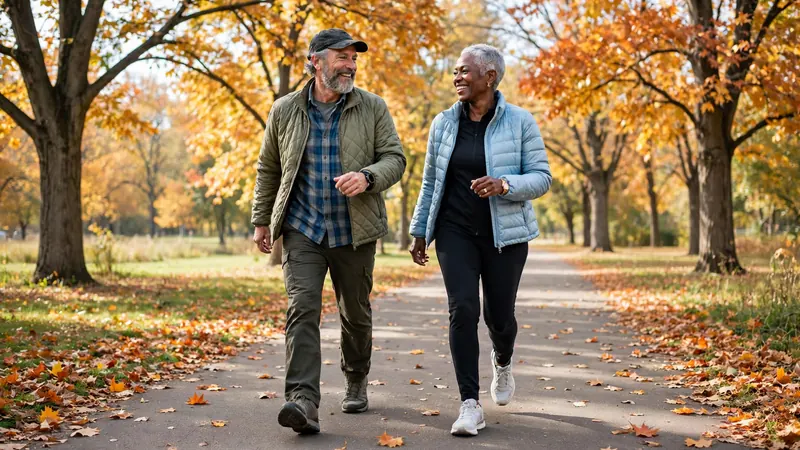
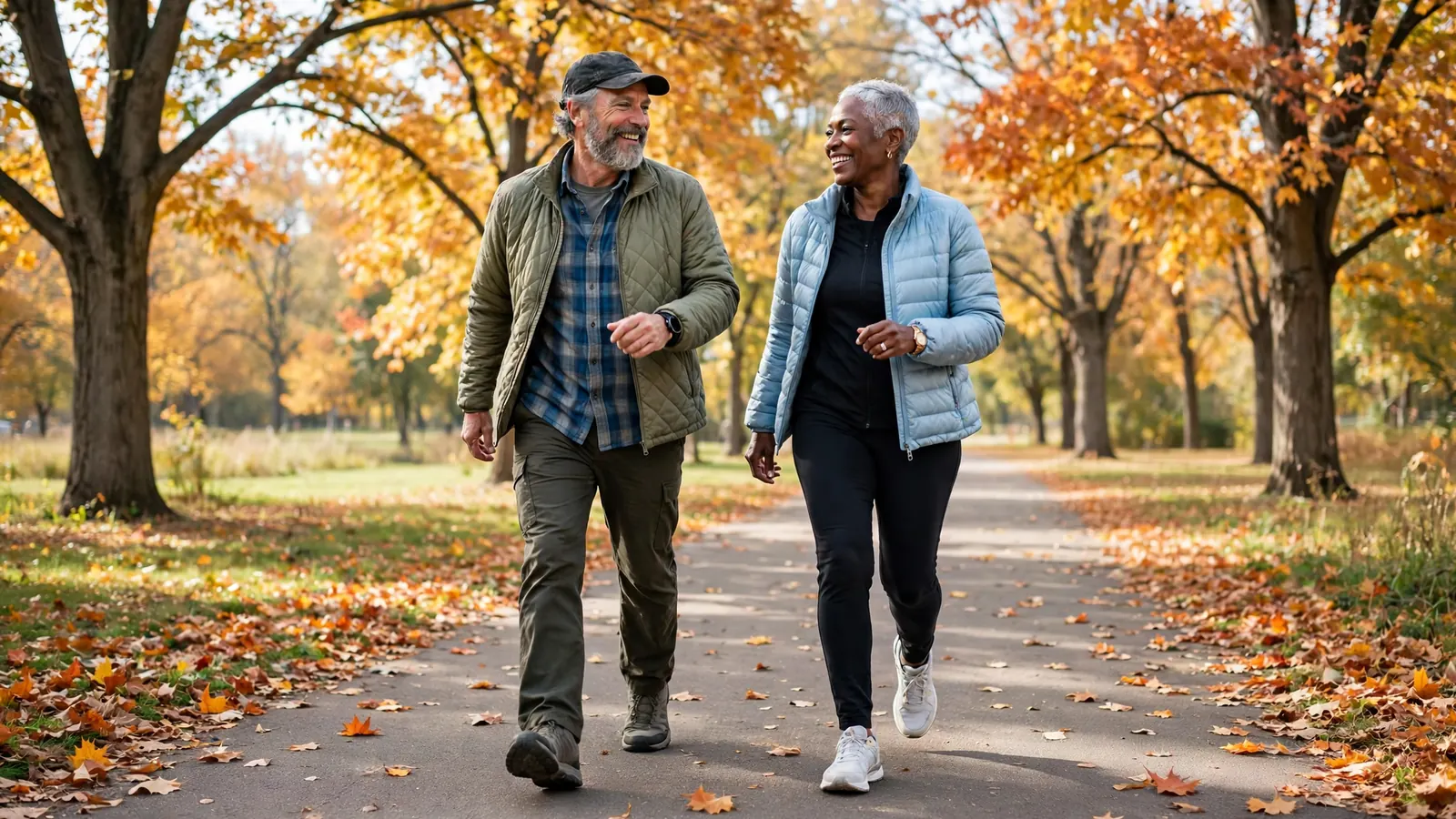
Start with 10-minute walks on 5 days a week and add about 5 minutes per walk every week or two. By week 8 you walk 30 minutes, 5 days a week, which equals the 150 minutes of moderate activity HHS recommends for adults. Walk at a pace where you can talk but not sing, and repeat any week that feels too hard.
Key takeaways
- Goal: 30 minutes of brisk walking on 5 days a week (150 minutes) by week 8.
- Start at 10 minutes per walk and add time slowly; repeat a week whenever you need to.
- Brisk means you can talk but not sing (about 5-6 on a 0-10 effort scale).
- Add muscle-strengthening on 2 or more days a week and some balance work.
- Stop and get help for chest pain, unusual shortness of breath or dizziness.
Walking is one of the easiest ways to get more active after 50. You need no gym, no special skills and very little gear. This 8-week plan starts with short, comfortable walks and builds to the 150 minutes a week that federal guidelines recommend, without asking your joints to do too much too soon.
How much walking should you aim for after 50?
The Physical Activity Guidelines for Americans recommend at least 150 minutes a week of moderate-intensity aerobic activity, such as brisk walking. For most people, that works out to 30 minutes on 5 days. The same guidelines call for muscle-strengthening activities on 2 or more days a week, and for older adults, activities that include balance training.
If 150 minutes sounds like a lot, that is fine. The guidelines are clear that some activity is better than none, and every minute counts toward the total. This plan gets you there in small steps.
The 8-week walking plan at a glance
| Week | Walks per week | Minutes per walk | Weekly total | Focus |
|---|---|---|---|---|
| 1 | 5 | 10 | 50 min | Easy, comfortable pace |
| 2 | 5 | 15 | 75 min | Easy pace, good posture |
| 3 | 5 | 20 | 100 min | Steady pace you can keep |
| 4 | 5 | 20 | 100 min | Add 3 brisk 1-minute stretches |
| 5 | 5 | 25 | 125 min | Mostly brisk after warm-up |
| 6 | 5 | 25 | 125 min | Add 4 faster 2-minute stretches |
| 7 | 5 | 30 | 150 min | Brisk pace most of the walk |
| 8 | 5 | 30 | 150 min | Brisk pace; try one gentle hill |
Week 4 and week 6 keep the same time as the week before on purpose. They let your body adjust before you add more minutes. If any week feels hard, repeat it. Taking 10 or 12 weeks to finish is still a success. If you already walk 20 minutes most days without trouble, you can start at week 3.
How should each walk be structured?
- Warm up for 3-5 minutes at an easy, relaxed pace. These minutes count toward your total.
- Walk the main part at the pace listed for that week.
- Cool down for 3-5 minutes by slowing back to an easy pace, then do a couple of gentle stretches.
What does "brisk" mean?
Brisk walking is moderate intensity. The CDC describes moderate activity as a level where you can talk but not sing, or about a 5 or 6 on a scale where sitting is 0 and your hardest effort is 10. You should breathe faster and feel warm, but still be able to hold a conversation.
How do the brisk stretches work?
In week 4, after your warm-up, walk a little faster for 1 minute, then return to your normal pace for a few minutes. Do this 3 times. In week 6, make the faster stretches 2 minutes long and do 4 of them. By week 7, most of your walk should feel brisk.
Simple moves to pair with your walks
A few minutes of these before or after your walk warm up your legs, build strength and help your balance. For a fuller routine, see our bodyweight leg workout and balance exercises.
The exercises
March in Place
Works: Warm-up, hips, heart rate1-2 minutes before you head out
- Stand tall near a counter or chair back you can touch for balance.
- Lift one knee to a comfortable height, then lower it and lift the other.
- Swing your arms gently as you march at a steady rhythm.
- Make it easier
- Lift your knees only a few inches and hold the counter.
- Make it harder
- Lift your knees higher and pump your arms more.
- Safety tip
- Keep a hand near support until you feel steady.
Standing Calf Raise
Works: Calves, ankles2 sets of 10-15 reps
- Stand facing a counter with your hands resting on it and feet hip-width apart.
- Rise slowly onto the balls of your feet.
- Pause for a second, then lower your heels with control.
- Make it easier
- Rise only partway up.
- Make it harder
- Use fingertips only for balance, or pause 3 seconds at the top.
- Safety tip
- Hold on with both hands if you feel unsteady.
Sit-to-Stand
Works: Thighs, glutes2 sets of 8-12 reps
- Sit near the front of a sturdy chair with feet flat and hip-width apart.
- Lean forward slightly and press through your heels to stand up.
- Slowly lower back down to sit.
- Make it easier
- Use your hands on the armrests to help.
- Make it harder
- Cross your arms over your chest and lower more slowly.
- Safety tip
- Place the chair against a wall so it cannot slide.
Heel-to-Toe Walk
Works: Balance, coordination2 passes of 10-20 steps
- Stand beside a counter or wall you can touch.
- Place one heel directly in front of the toes of the other foot.
- Take 10-20 steps this way, looking ahead rather than down.
- Make it easier
- Leave a small gap between heel and toe and keep a hand on the wall.
- Make it harder
- Walk with your hand hovering just off the wall.
- Safety tip
- Always do this next to something sturdy you can grab.
Standing Calf Stretch
Works: Calves, AchillesHold 20-30 seconds, 2 times per leg
- Place both hands on a wall at shoulder height.
- Step one foot back, keeping that heel on the floor and leg straight.
- Bend the front knee until you feel a gentle stretch in the back calf.
- Make it easier
- Take a shorter step back.
- Make it harder
- Take a slightly longer step back.
- Safety tip
- Stretch gently; never bounce.
What should you wear and bring?
- Shoes: supportive walking shoes with a firm heel and room for your toes. Replace them when the soles look worn.
- Layers: you will warm up after 10 minutes, so dress so you can remove a layer.
- Visibility: wear bright or reflective clothing near roads, especially early or late in the day.
- Water and phone: carry both on longer walks and in warm weather.
What if the weather is bad?
Summer heat, winter ice and storm days do not have to break your streak. Walk laps indoors at home, at a shopping mall or at a community or recreation center. You can also swap in a low-impact cardio workout at home for the same number of minutes. Once you reach week 8, our guide to how long it takes to walk 3 miles can help you set your next goal.
Safety first: when to talk to your doctor
Check with your doctor before starting if you have a heart condition, lung disease, diabetes, uncontrolled blood pressure, recent surgery or joint replacement, or if you have fallen recently. About 1 in 4 adults 65 and older reports a fall each year, according to the CDC, so choose even, well-lit routes and watch for curbs and uneven pavement.
Stop walking and seek medical help right away if you have chest pain or pressure, unusual shortness of breath, dizziness, or pain that spreads to your arm, neck or jaw. Mild muscle soreness in the first weeks is normal; sharp joint pain is not, so ease off and get it checked if it lasts.
Frequently asked questions
How far should a 50-year-old walk every day?
Focus on time rather than distance. A good target is about 30 minutes of brisk walking on 5 days a week, which meets the 150-minute guideline. At a moderate pace, that is often somewhere around 1 to 2 miles per walk, but the minutes are what matter.
Is walking enough exercise for adults over 50?
Brisk walking covers the aerobic part of the guidelines. You still need muscle-strengthening activities on 2 or more days a week, and balance activities are recommended for older adults. Short strength and balance routines pair well with walking.
Can I split my walk into shorter walks?
Yes. Under the current federal guidelines, all moderate activity counts toward your weekly total, so three 10-minute walks add up the same as one 30-minute walk.
What if I miss a week of the plan?
Go back to the last week that felt comfortable and continue from there. Progress is about consistency over time, not a perfect streak.
Sources
- HHS: Physical Activity Guidelines for Americans, 2nd edition
- CDC: Older Adult Activity: An Overview
- CDC: Older Adult Fall Prevention
- National Institute on Aging (NIH): Exercise and Physical Activity
Health note: This article is general information, not medical advice. If you have a heart condition, high blood pressure, diabetes, recent surgery, joint replacement or any symptoms such as chest pain, dizziness or unusual shortness of breath, talk to your doctor before starting. Stop any exercise that causes sharp pain. Read our full disclaimer.