
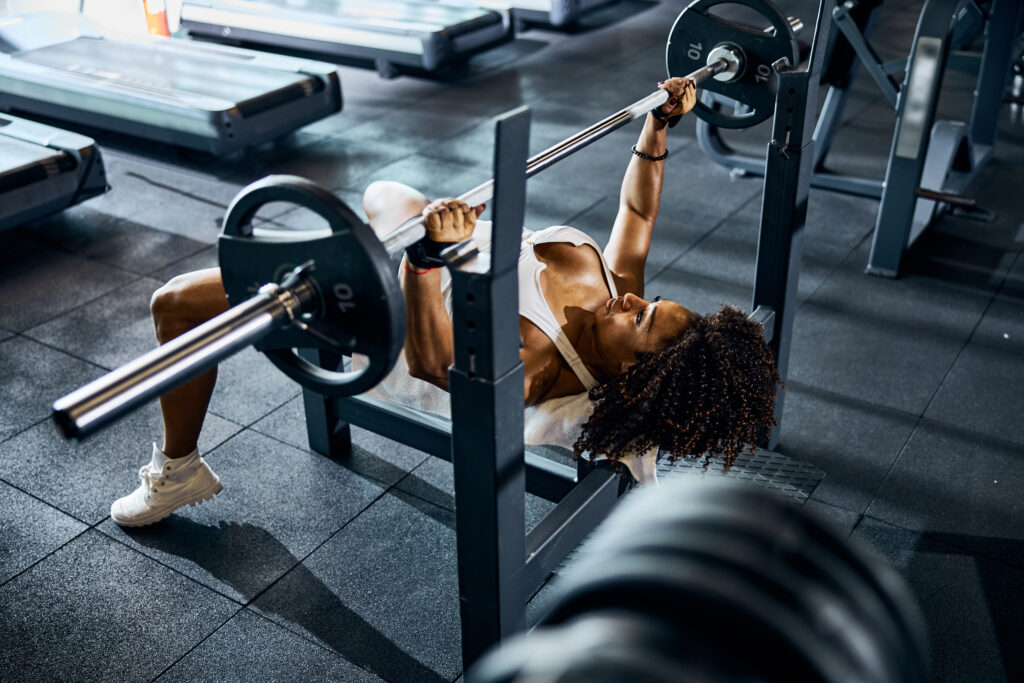
Building a powerful, sculpted upper body doesn’t require an expensive gym membership or fancy equipment. With the right exercises and consistent effort, you can develop impressive chest and tricep strength from the comfort of your home. This comprehensive guide will show you exactly how to target these crucial muscle groups effectively.
Why Train Chest and Triceps Together?
Chest and triceps make an ideal workout pairing because they’re synergistic muscle groups. Your triceps assist in almost every chest exercise, which means training them together maximizes efficiency and promotes balanced development. This combination also allows one muscle group to recover while you work the other, creating an effective workout flow.
Benefits of At-Home Chest and Tricep Training
Convenience and Flexibility: No commute time, no waiting for equipment, and complete control over your schedule. You can fit in a workout during lunch breaks or early mornings without leaving home.
Cost-Effective: Save money on gym memberships while achieving the same muscle-building results. Bodyweight exercises and minimal equipment like resistance bands cost a fraction of commercial gym fees.
Progressive Overload: You can continuously challenge your muscles by adjusting tempo, adding pauses, increasing reps, or incorporating variations that increase difficulty.
Essential Chest Exercises for Home Workouts
1. Standard Push-Ups
The foundation of any at-home chest workout, standard push-ups engage your entire chest, shoulders, and triceps. Position your hands slightly wider than shoulder-width, maintain a straight body line from head to heels, and lower yourself until your chest nearly touches the floor.
Sets and Reps: 3-4 sets of 10-20 reps
Pro Tip: Focus on controlled movement rather than speed. A 2-second descent and 1-second ascent maximizes muscle tension.
2. Wide Push-Ups
By placing your hands wider than standard push-ups, you increase chest activation and reduce tricep involvement. This variation emphasizes the outer chest muscles, contributing to that coveted chest width.
Sets and Reps: 3 sets of 8-15 reps
3. Decline Push-Ups
Elevate your feet on a chair, couch, or stairs to shift emphasis to your upper chest. This angle increases difficulty and targets the often-underdeveloped upper pectoral region.
Sets and Reps: 3 sets of 8-12 reps
4. Diamond Push-Ups
Form a diamond shape with your hands beneath your chest by touching your thumbs and index fingers together. This variation heavily engages both chest and triceps, making it a dual-purpose powerhouse exercise.
Sets and Reps: 3 sets of 6-12 reps
5. Archer Push-Ups
Assume a wide push-up position, then shift your weight to one side as you descend, keeping the opposite arm relatively straight. This unilateral movement builds serious strength and prepares you for one-arm push-up progressions.
Sets and Reps: 3 sets of 5-8 reps per side
Effective Tricep Exercises Without Equipment
1. Close-Grip Push-Ups
Position your hands directly under your shoulders or slightly closer, keeping your elbows tucked close to your body. This hand placement dramatically increases tricep activation while still engaging your chest.
Sets and Reps: 3-4 sets of 10-15 reps
2. Tricep Dips
Use a sturdy chair, bench, or coffee table for this classic tricep builder. Place your hands on the edge behind you with fingers pointing forward, extend your legs out, and lower your body by bending your elbows to 90 degrees.
Sets and Reps: 3-4 sets of 10-20 reps
Progression: Elevate your feet on another surface to increase difficulty, or add weight by placing a backpack filled with books on your lap.
3. Pike Push-Ups
Start in a downward dog position with your hips elevated and form an inverted V-shape with your body. Lower your head toward the floor by bending your elbows. This exercise targets triceps while also engaging shoulders.
Sets and Reps: 3 sets of 8-12 reps
4. Wall Push-Ups
Perfect for beginners or those recovering from injury, wall push-ups offer a gentler introduction to chest and tricep training. For a complete guide on proper form and progression, check out this wall push-up guide with step-by-step instructions.
Sets and Reps: 3 sets of 15-20 reps
5. Bodyweight Skull Crushers
Assume a push-up position but with hands elevated on a stable surface like a low table or step. Lower your body by bending only at the elbows, bringing your head toward your hands while keeping your upper arms stationary.
Sets and Reps: 3 sets of 8-12 reps
Sample At-Home Chest and Tricep Workout Routine
Beginner Routine (3 days per week)
- Wall Push-Ups: 3 sets of 15-20 reps
- Standard Push-Ups (on knees if needed): 3 sets of 8-12 reps
- Tricep Dips (feet on floor): 3 sets of 10-15 reps
- Close-Grip Push-Ups: 2 sets of 6-10 reps
Rest: 60-90 seconds between sets
Intermediate Routine (3-4 days per week)
- Standard Push-Ups: 4 sets of 12-20 reps
- Wide Push-Ups: 3 sets of 10-15 reps
- Tricep Dips (feet elevated): 4 sets of 12-18 reps
- Diamond Push-Ups: 3 sets of 8-12 reps
- Pike Push-Ups: 3 sets of 10-15 reps
Rest: 45-60 seconds between sets
Advanced Routine (4-5 days per week)
- Decline Push-Ups: 4 sets of 15-20 reps
- Archer Push-Ups: 4 sets of 6-10 reps per side
- Weighted Tricep Dips: 4 sets of 12-15 reps
- Diamond Push-Ups: 4 sets of 12-15 reps
- Bodyweight Skull Crushers: 3 sets of 10-12 reps
- Plyometric Push-Ups: 3 sets of 8-10 reps
Rest: 30-45 seconds between sets
Progressive Overload Strategies
To continue building muscle and strength, you must progressively challenge your body. Here are proven methods to increase difficulty:
Increase Reps: Once you can complete the high end of the rep range comfortably, add 2-3 more reps to each set.
Add Sets: Include an additional set to each exercise when your current volume becomes manageable.
Slow Down Tempo: Try a 3-second eccentric (lowering) phase and 1-second concentric (lifting) phase to increase time under tension.
Decrease Rest Time: Gradually reduce rest periods between sets from 90 seconds down to 30-45 seconds.
Add Pauses: Hold the bottom position of push-ups or dips for 2-3 seconds before pressing back up.
Use Resistance Bands: Loop a resistance band across your back and anchor it with your hands during push-ups for added resistance.
Wear a Weighted Vest or Backpack: Add external load while maintaining proper form.
Common Mistakes to Avoid
Flaring Elbows Excessively: While some elbow flare is natural in chest exercises, excessive flaring can stress your shoulders. Aim for about 45 degrees from your torso.
Sagging Hips: Maintain a rigid plank position throughout all push-up variations. Engage your core and glutes to prevent lower back strain.
Incomplete Range of Motion: Lower yourself until your chest nearly touches the floor and fully extend your arms at the top for maximum muscle activation.
Training Too Frequently: Muscles grow during recovery, not during workouts. Allow at least 48 hours between chest and tricep sessions.
Neglecting Warm-Up: Spend 5-10 minutes performing arm circles, shoulder rotations, and light cardio to prepare your muscles and joints.
Warm-Up and Cool-Down Essentials
Pre-Workout Warm-Up (5-10 minutes)
- Arm circles: 20 forward, 20 backward
- Shoulder rolls: 15 forward, 15 backward
- Jumping jacks or jogging in place: 2 minutes
- Light push-ups or wall push-ups: 10-15 reps
- Wrist circles: 10 each direction
- Cat-cow stretches: 10 reps
Post-Workout Cool-Down (5-10 minutes)
- Doorway chest stretch: Hold 30 seconds per side
- Overhead tricep stretch: Hold 30 seconds per arm
- Cross-body shoulder stretch: Hold 30 seconds per arm
- Child’s pose: Hold 60 seconds
- Deep breathing exercises: 2-3 minutes
Nutrition Tips for Muscle Growth
Exercise alone won’t maximize your results. Support your training with proper nutrition:
Prioritize Protein: Consume 0.7-1 gram of protein per pound of bodyweight daily to support muscle repair and growth. Quality sources include chicken, fish, eggs, Greek yogurt, legumes, and protein supplements.
Don’t Fear Carbohydrates: Carbs fuel your workouts and replenish glycogen stores. Include whole grains, fruits, and vegetables in your diet.
Maintain Adequate Hydration: Drink at least 8-10 glasses of water daily, more if you’re training intensely or in hot conditions.
Create a Slight Caloric Surplus: To build muscle, you generally need to consume slightly more calories than you burn. Aim for 200-300 calories above maintenance.
Time Your Meals: Consider eating a protein-rich meal or snack within 2 hours post-workout to optimize recovery.
Tracking Your Progress
Monitor your development to stay motivated and make informed adjustments:
- Keep a workout journal logging exercises, sets, reps, and how you felt
- Take progress photos every 4 weeks from multiple angles
- Measure chest and arm circumference monthly
- Record your maximum reps at standard push-ups and tricep dips
- Note improvements in form quality and exercise difficulty levels
When to Increase Difficulty
You’re ready to progress when you can complete the highest recommended rep range for all sets with good form and without excessive fatigue. Additionally, if you can perform exercises that previously challenged you with relative ease, it’s time to advance to more difficult variations or add external resistance.
Conclusion
Building impressive chest and tricep strength at home is entirely achievable with dedication, proper exercise selection, and progressive overload. This workout approach saves time and money while delivering results comparable to gym training. Start with exercises matching your current fitness level, focus on perfect form, progressively increase difficulty, and support your training with adequate nutrition and recovery.
Consistency matters more than perfection. Stick with your routine for at least 8-12 weeks before evaluating results. Your home can be your strongest asset in building the upper body you’ve always wanted.
Frequently Asked Questions
How often should I train chest and triceps?
Train this muscle pairing 2-3 times per week with at least 48 hours of recovery between sessions. This frequency allows adequate stimulus for growth while preventing overtraining.
Can I build muscle with just bodyweight exercises?
Absolutely. Bodyweight training effectively builds muscle, especially for beginners and intermediates. As you advance, focus on progressive overload through increased reps, tempo changes, and more challenging variations.
How long should my chest and tricep workout last?
A focused session should take 30-45 minutes, including warm-up and cool-down. Quality and intensity matter more than duration.
What if I can’t do a single push-up?
Start with wall push-ups or incline push-ups using stairs or a sturdy table. As you build strength, gradually decrease the incline until you can perform floor push-ups.
Should I train chest and triceps on the same day?
Yes, this is an efficient approach since triceps assist in chest exercises. Training them together prevents overworking triceps on separate days and allows better recovery scheduling.
How do I know if I’m using proper form?
Record yourself performing exercises, compare with tutorial videos, or ask someone knowledgeable to observe your technique. Common form checks include maintaining a straight body line, controlled tempo, and full range of motion.
Can women benefit from this workout routine?
Absolutely. These exercises benefit everyone regardless of gender. Women won’t “bulk up” from bodyweight training without specifically designing their program and nutrition for that goal.
Ready to transform your upper body? Start with these exercises today, remain consistent with your training, and watch your chest and triceps develop impressive strength and definition right from your living room.